
How Loading Bays Reduce Gaps, Drafts, and Forklift Delays
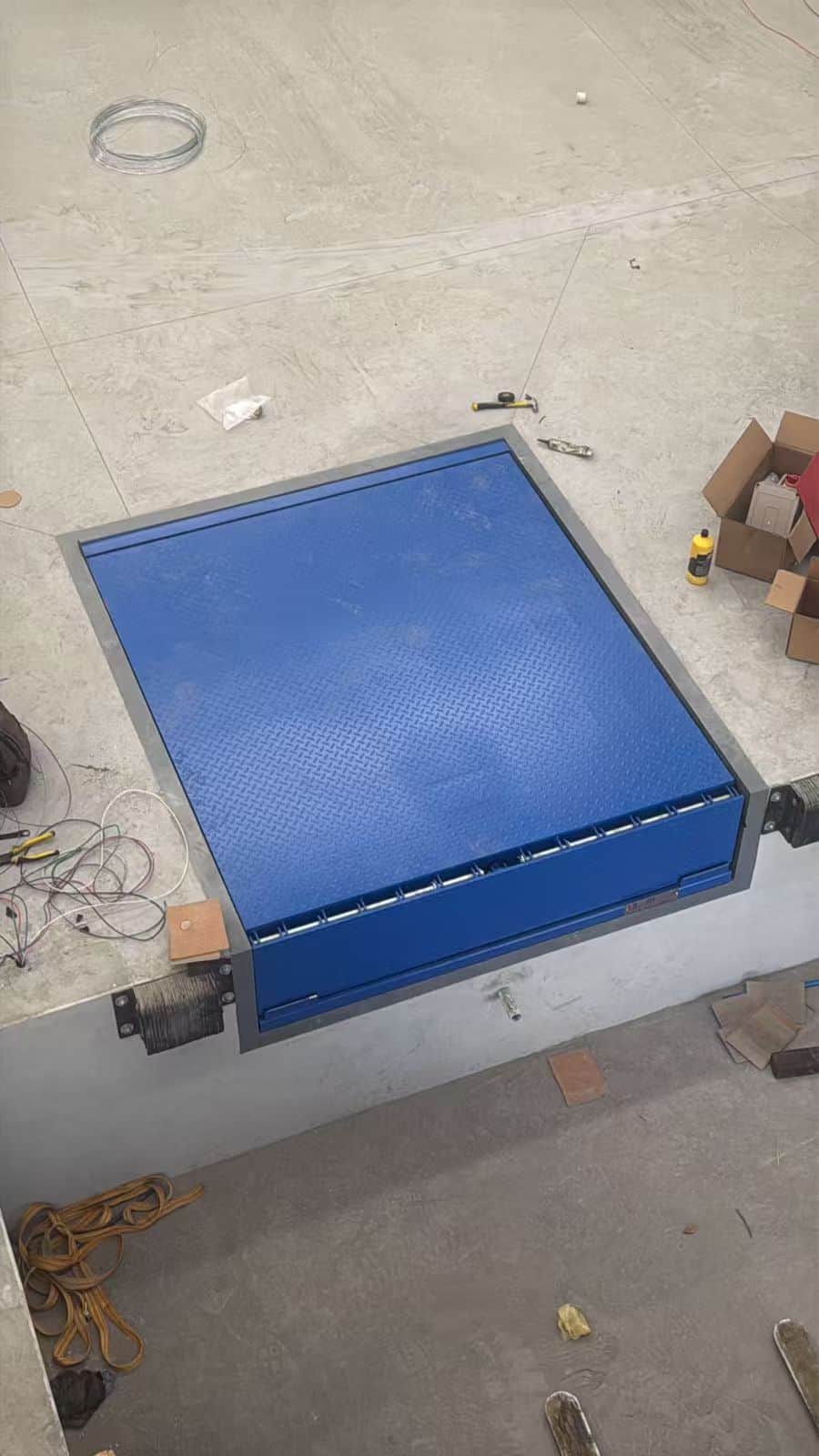
A dock leveler solves a common warehouse problem: the building floor and vehicle bed are rarely at the same height or distance. Trailer suspension, cargo weight, dock height, and parking position change the transfer angle. Without a stable bridge, forklift operators face abrupt slopes, exposed gaps, and repeated stops.
The space around the trailer creates another problem. Air, rain, dust, insects, and temperature changes can enter between the truck and building. A dock shelter or dock seal limits this exposure, but it cannot correct an unsafe deck-to-trailer transition. The loading dock leveler manages the working gap, while the shelter improves enclosure around the vehicle.
Why Dock Gaps Become an Operational Problem
Vehicle bed height and position change from one delivery to the next. A poorly matched platform can create a steep slope, insufficient lip engagement, or an abrupt level change. Forklifts slow down, loads move more sharply, and impacts increase on wheels and the dock edge. These delays accumulate across a shift.
Before selection, buyers should document truck-bed ranges, forklift and pallet loads, traffic frequency, pit dimensions, and the required working range. These conditions matter more than choosing the highest nominal capacity.
How a Dock Leveler Supports Safer Transfer
SEPPES offers flip-lip and telescopic models within its Summit loading system. A flip-lip hydraulic dock leveler suits regular fleets and standard cycles. A telescopic model provides controlled lip extension and reaches farther into the vehicle, which helps when truck position varies or the exposed gap needs tighter control.
Platform length affects the working slope, lip length affects trailer engagement, and pit dimensions determine whether the unit fits the civil structure. Dynamic load should reflect the forklift, goods, crossing speed, and frequency. A rated capacity does not remove the need to check concentrated wheel loads and impact.
Hydraulic dock leveler safety checks
A hydraulic dock leveler should provide an emergency stop and controlled maintenance position. Depending on configuration, safety equipment may include an anti-burst valve, toe guards, maintenance support, and dock bumpers. Nobody should work beneath an unsupported deck.
SEPPES technical materials list several sizes, plate thicknesses, and load options, but these are configuration-specific. Final dimensions, hydraulic power, deck construction, load, and working range must be confirmed in the project drawing.
Where the Dock Shelter Completes the Interface
A platform can smooth the route while conditioned air still escapes around the vehicle. A mechanical dock shelter accommodates varied trucks with flexible curtains. A foam or sponge seal provides close contact when vehicle dimensions are consistent and the wall can accept compression. An inflatable shelter offers broader adjustment for temperature-controlled or high-sealing applications.
Selection depends on fleet variation, door size, reversing accuracy, wall condition, climate, and sealing target. A narrow dock seal may interfere with access, while poor contact allows drafts. Trailer impact can damage pads or curtains when guides, bumpers, or markings are inadequate. Size the shelter from fleet data, not only the doorway.
The door, shelter, platform, bumpers, and vehicle restraint should follow a defined sequence. Interlocking can prevent platform operation before the door is safe. Warning lights coordinate the driver and warehouse team. The OSHA warehousing guidance offers a general safety reference and does not imply a relationship with SEPPES.
Procurement Checks for a Complete Loading Bay
Record dock height, pit size, clear opening, vehicle-bed range, trailer widths, traffic, forklift data, and temperature-separation needs. Confirm whether the site needs a flip-lip or telescopic platform and whether the fleet is consistent enough for a compression seal. Mixed fleets often need a mechanical or inflatable shelter.
Ask the supplier to identify standard and optional equipment. Verify controls, emergency operation, restraint logic, bumpers, drainage, electrical supply, sealing, and maintenance access. Review behavior during power loss, incorrect truck positioning, or a damaged curtain.
A common mistake is treating the platform and shelter as unrelated accessories. Another is selecting from one truck size without checking the fleet. A project survey allows SEPPES to coordinate the dock leveler, shelter, door, and safety equipment around the actual process.
