
How Wind-Exposed Factory Openings Keep Traffic Moving
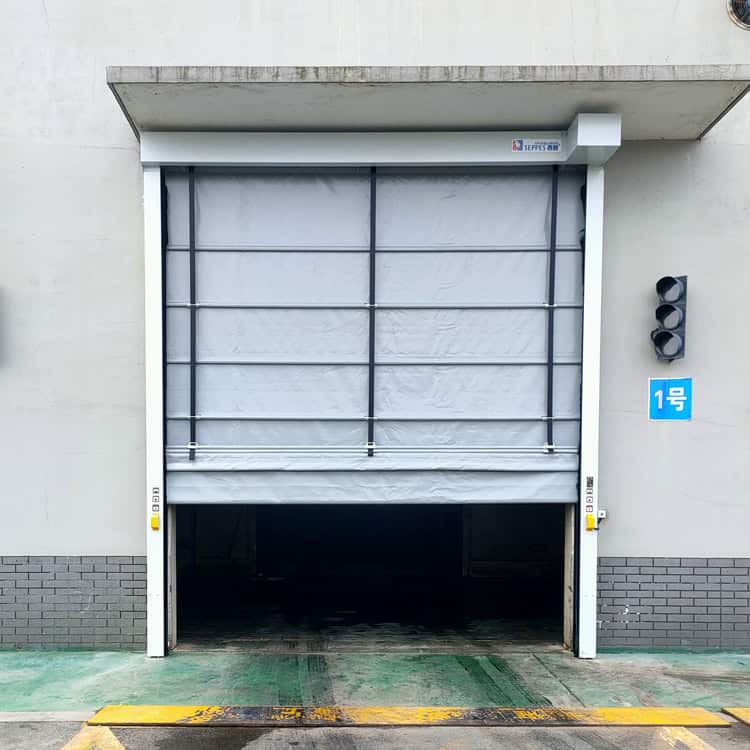
High speed industrial doors are often compared by opening speed, but large exterior entrances create a broader problem. They must serve vehicles while managing wind, curtain movement, dust, and repeated stress. A door selected only by price or nominal speed can become unstable and create a maintenance bottleneck.
This problem appears in factories and warehouses with wide external openings. The doorway must support production flow through frequent cycles, so its structure, controls, safety, and maintenance access should be evaluated as one system.
Why Large Exterior Doorways Become Operational Weak Points
Wind pressure increases the load on a large exposed curtain. It can cause vibration, uneven guide wear, and additional stress on lifting components. Crosswinds may also carry rain, dust, or packaging debris into the building. These effects become more disruptive when the door opens repeatedly during a shift.
Traffic adds risk. Late opening interrupts forklifts, while excessive hold-open time increases air exchange. Poor sensor positioning can cause false activation or make drivers wait too close to the curtain. Buyers should record opening size, wind direction, cycle count, vehicle type, and available headroom before comparing products.
Where a High Speed Stacking Door Fits the Problem
For a broad opening with meaningful wind exposure, SEPPES may specify the Hurricane high speed stacking door. Its flexible curtain rises in folded sections, while horizontal wind bars distribute wind forces across the opening. The design suits industrial passages where a conventional roll-up high speed door may not provide the required span or wind stability.
The SEPPES catalogue states speeds up to 1.2 m/s and wind resistance around Force 10. A configuration sheet lists 0.6-1.2 m/s, up to 800 cycles per day, and Level 11 wind resistance. These source-specific values are not universal guarantees. Actual performance depends on size, configuration, anchoring, exposure, and the approved drawing.
Match wind stability to the building
Selection starts with the wall structure and opening conditions. Supporting steelwork and fixing surfaces must accept the loads transferred by the door. The folding curtain, guides, and motor also require more headroom than some roll-up designs. A site survey should confirm clearances before the quotation is finalized.
Wind ratings must be interpreted in context. A sheltered opening differs from a coastal facade or wind corridor. Buyers should provide local design-wind information; the door does not replace the building engineer’s structural assessment.
Safety and Control for Frequent Vehicle Passage
The activation method should let the door open safely without reacting to unrelated movement. Radar or a ground loop may suit forklift routes. Pull cords, remotes, access control, or equipment signals can support controlled processes. I/O interfaces can coordinate the door with an AGV, conveyor, or production line.
The Hurricane series includes infrared protection in the catalogue, with a safety light curtain available as an option. Warning lights, traffic signals, bollards, and marked pedestrian routes may also be appropriate after a traffic review. The OSHA powered industrial truck guidance provides a general workplace-safety reference and does not imply any partnership with SEPPES.
Commissioning should verify detection from both directions with actual vehicles. Scheduled checks remain necessary because dust, impact, or vibration can affect sensor alignment.
Buyer Checks for High Speed Industrial Doors
Start with operating data: clear width and height, indoor or outdoor position, cycles per shift, vehicle envelope, wind exposure, temperature difference, and sealing needs. Then confirm installation space, power supply, controls, emergency opening, and any fire-system or building-management connection. The quotation should distinguish standard equipment from optional safety and activation devices.
Maintenance access also matters. Technicians need safe access to straps, wind bars, guides, sensors, and the drive. Define inspection intervals and ask about spare parts when the route is production-critical.
Common mistakes include choosing the fastest door without checking traffic and applying one wind level to every facade. Document the site, obtain a project-specific drawing, and approve the safety logic before manufacturing. SEPPES can then configure the high speed stacking door around the real opening.
