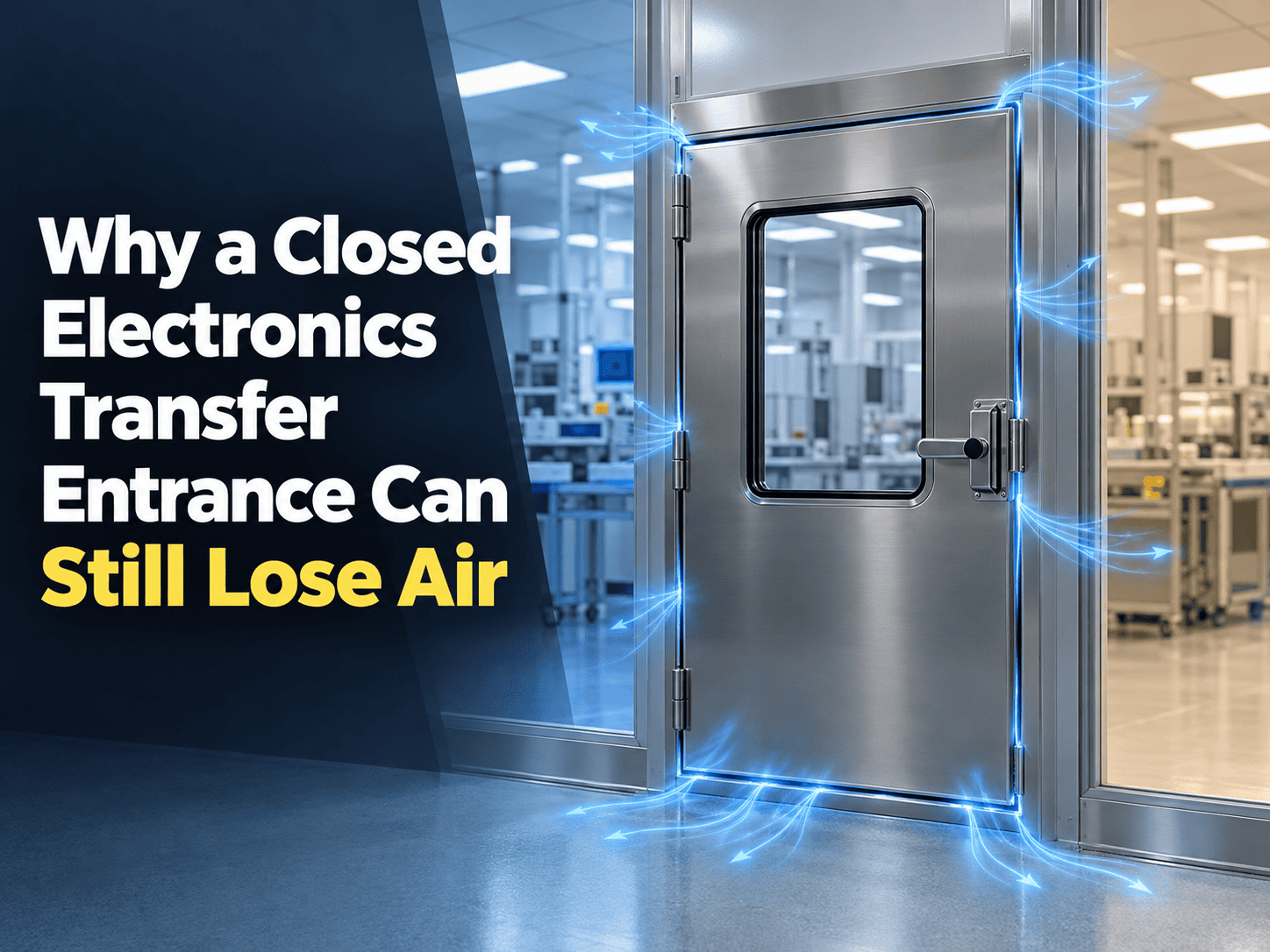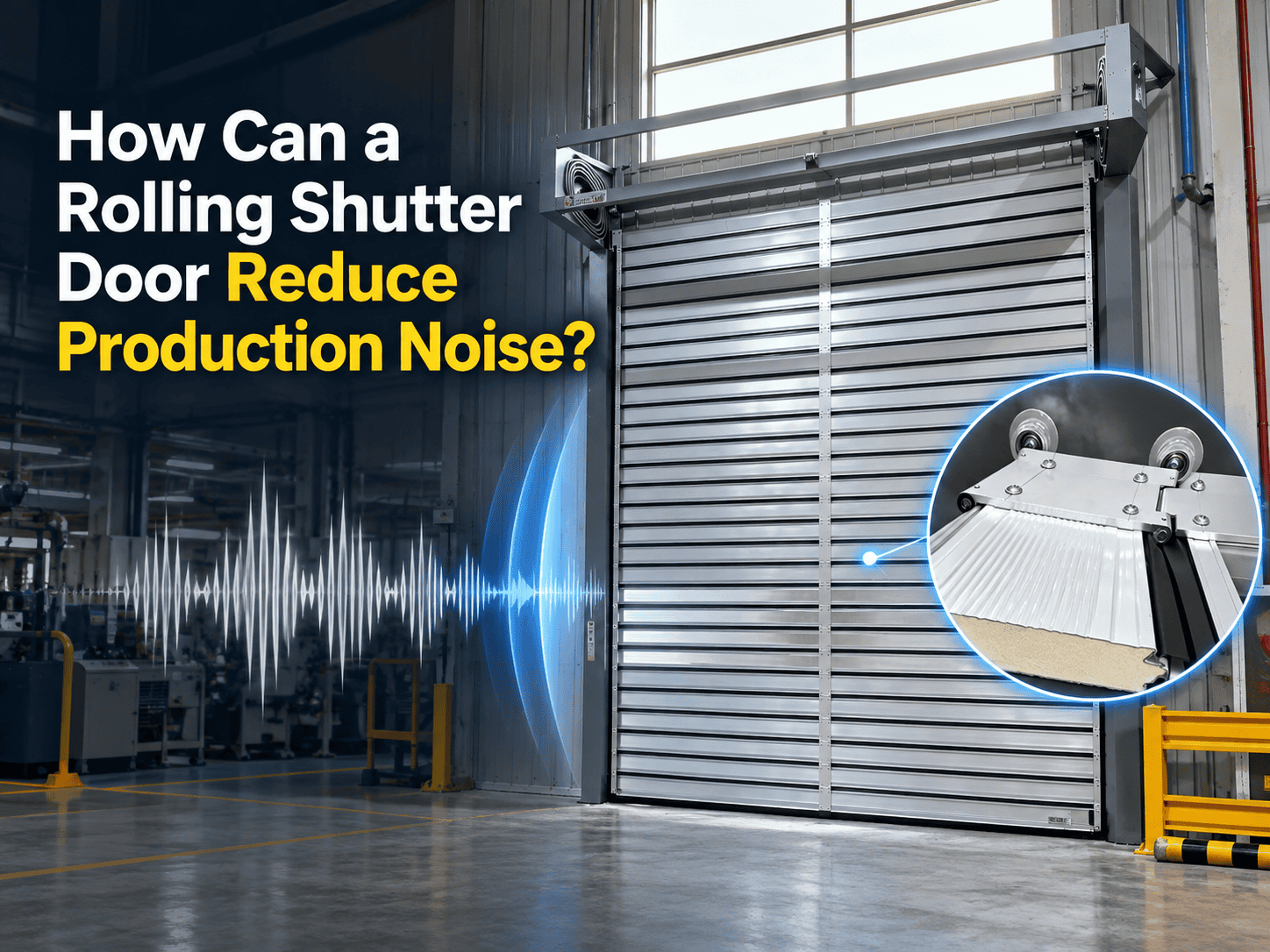
SEPPES rigid rolling shutter door can help limit airborne noise passing through production entrances when closed, while rapid operation supports material flow. Results depend on the door assembly, surrounding partition and time spent open, not simply its product name.
In a machining facility, an open pallet route allows sound to reach adjoining assembly or inspection areas. The challenge is maintaining separation without creating a traffic bottleneck.
Why Do Production Entrances Matter for Noise Control?
An open entrance creates a direct sound path between areas that the surrounding wall is intended to separate. Improving the door can address that path, but sound may also travel through ventilation openings, adjacent construction or structural connections.
欧州委員会の UK HSE’s workplace-design guidance recommends separating noisy operations and highlights effective seals and self-closing doors in noise refuges. It also distinguishes direct sound from reflected sound. This supports reviewing the whole separation arrangement, not attributing every noise problem to the entrance.
Identify the receiving position: a door cannot remove noise beside the operating machine.
How Does a SEPPES Rolling Shutter Door Help?
A suitable rigid door provides a closed barrier, while timely opening and closing can reduce unnecessary periods without that barrier. These are complementary functions: panel construction addresses transmission when closed, while operating logic determines how often the opening is exposed.
The SEPPES Sonic rigid high-speed door uses a spiral-track arrangement, unlike a conventional shutter wound onto a barrel. Its supplied catalogue describes double-skin aluminium panels with an insulating core; configuration material describes perimeter seals. Buyers comparing industrial insulated roller shutter doors should distinguish this construction from a tested acoustic rating.
For a high speed roller shutter door on a forklift route, match opening triggers and hold-open settings to actual traffic. Avoid nuisance openings without shortening delays or altering protective functions in ways that compromise safe passage.
Can the Door Reduce Noise by 30 dB?
A 30 dB reduction must be verified for a defined configuration and measurement condition; it cannot be promised for every installation. For this project, treat 30 dB as the proposed performance target until supporting evidence is available.
Ask whether the figure describes a laboratory sound-insulation rating or a measured difference at a receiving position. Request the test method, frequency information, door size, panel and seal details, installation arrangement and door state. A panel-only result does not establish the performance of a complete installed entrance.
Even a verified closed-door rating cannot simply be subtracted from the noise level across an entire shift. Open periods, other sound paths and noise sources in the receiving area affect the result. Do not describe 30 dB as a 30 percent reduction.
What Should Buyers Compare Before Ordering?
Compare complete assemblies and supporting evidence, not speed or panel thickness alone. When evaluating high speed insulated roller shutter doors(soundproof roll up door), request acoustic evidence separately from thermal data.
| 選定項目 | Information to request |
|---|---|
| Acoustic objective | Target location, measurement quantity and operating conditions |
| Product evidence | Report matching the quoted door assembly and configuration |
| 設置 | Frame support, perimeter treatment and floor interface |
| Traffic pattern | Peak movements, normal open duration and opening triggers |
| Maintenance | Seal inspection, approved replacements and service access |
Survey the existing partition as well as the opening. Ask the responsible designer to review bypass paths before assuming that changing only the door will deliver the target.
How Should the Factory Verify the Result?
Agree a competent acoustic assessment with comparable before-and-after conditions and representative production activity. Record equipment operation, measurement locations, background noise and door states so the comparison can be interpreted.
Assess closed-door performance separately from normal traffic operation. Retain the report with handover documents. A quiet-period reading does not prove a whole-shift improvement.