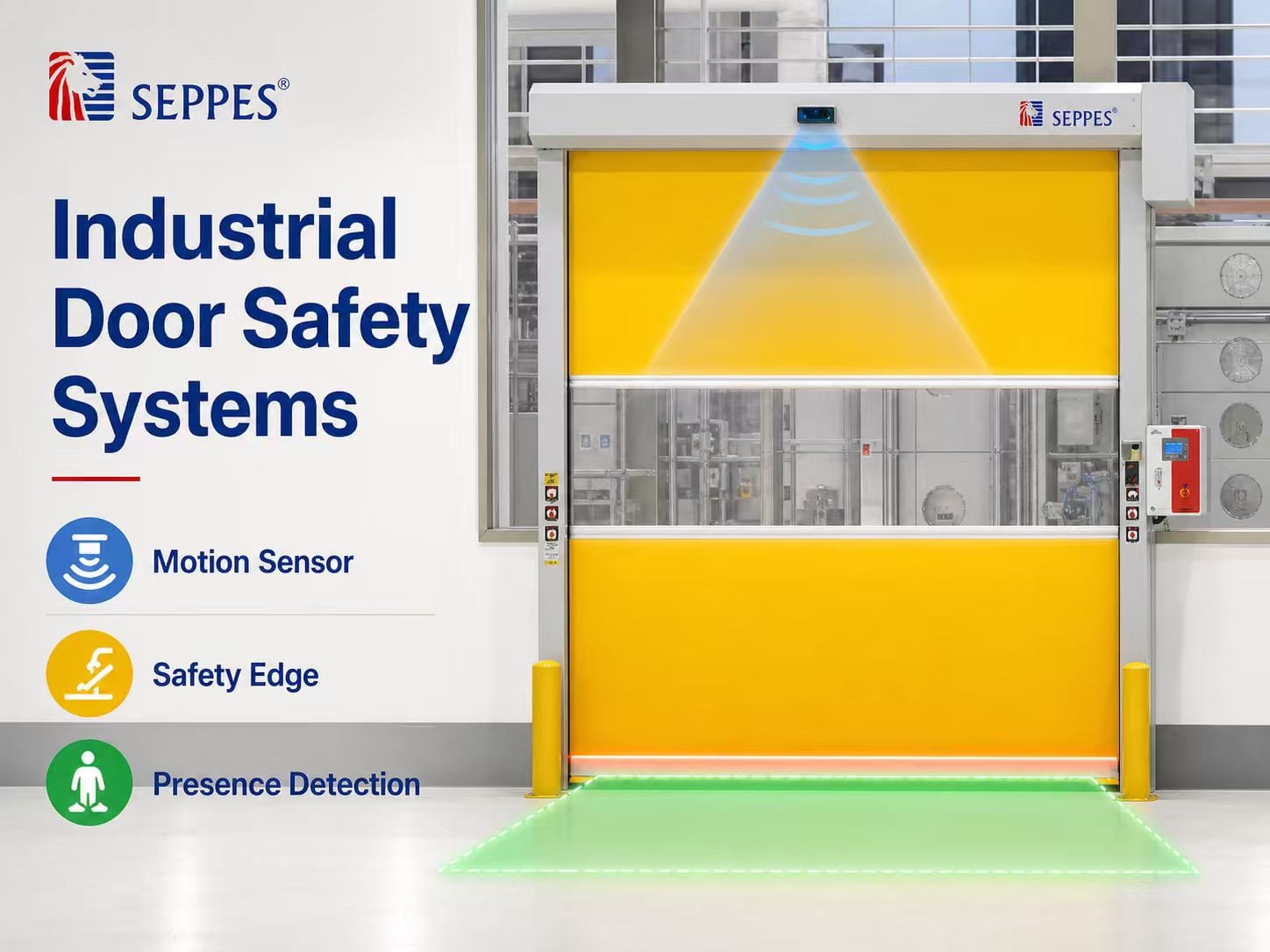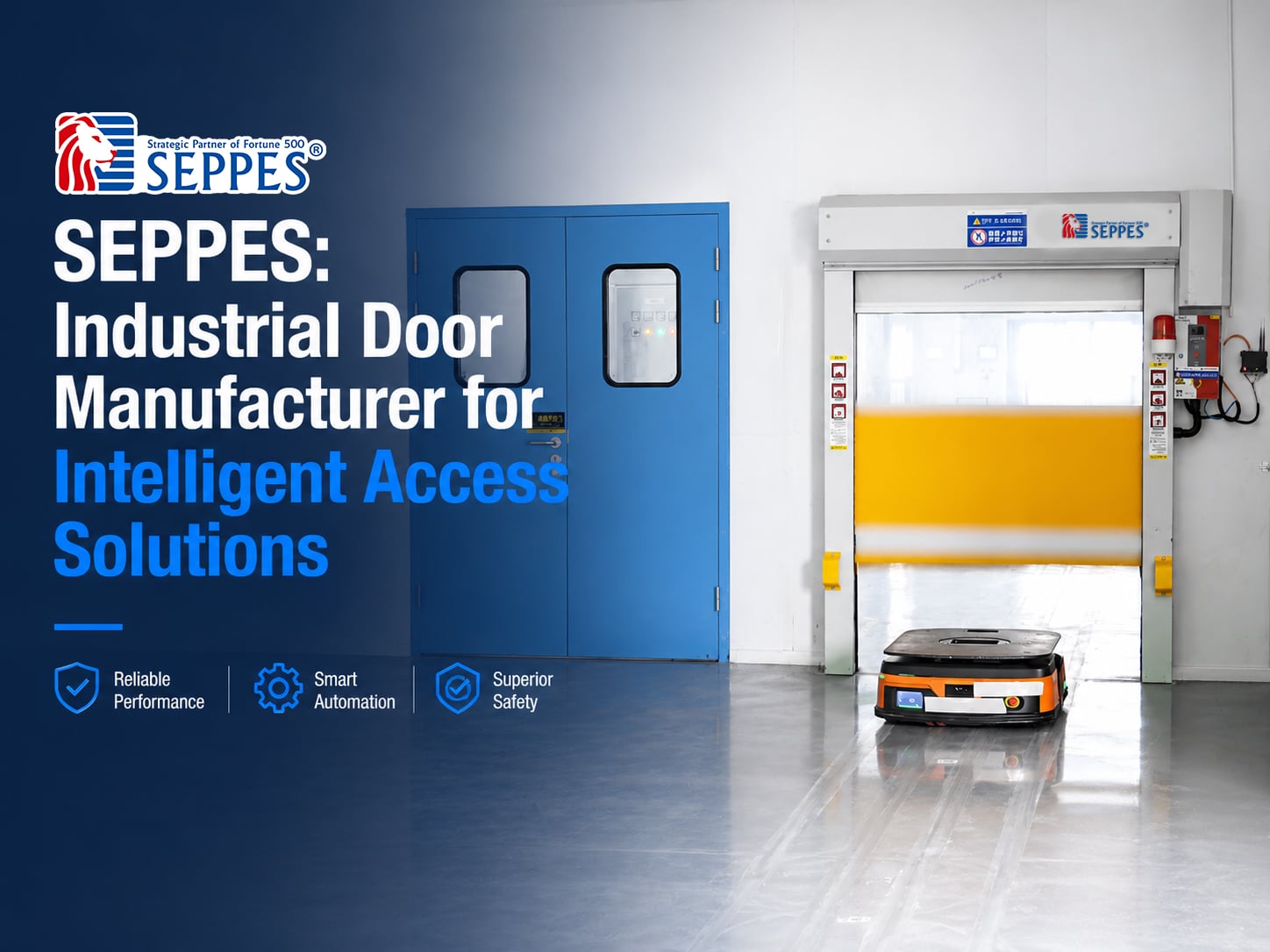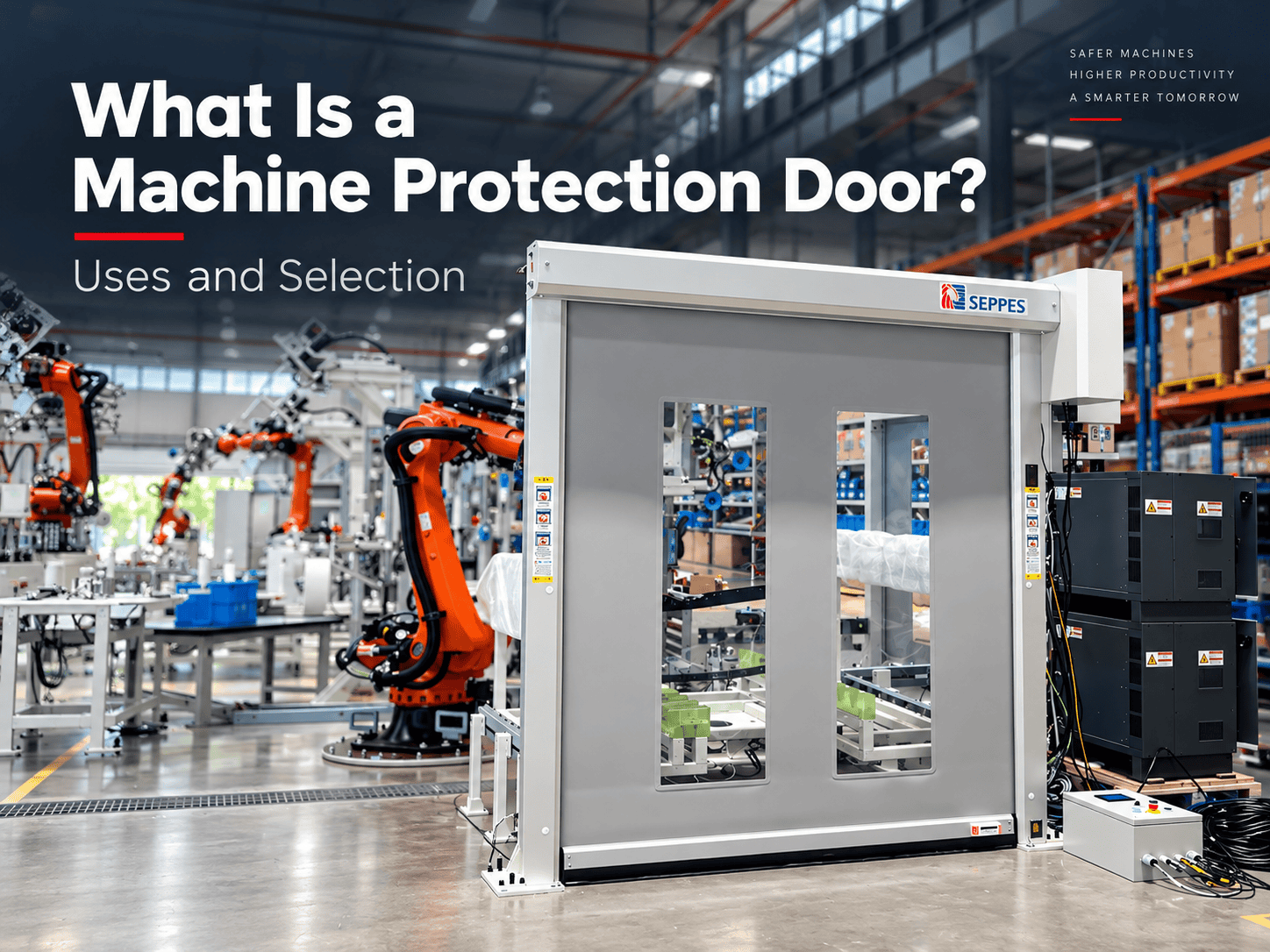
Machine protection doors are movable barriers fitted to openings in machine enclosures or automated production cells. They provide controlled access for loading, unloading, and inspection. When specified for the hazard and integrated with a suitable safety control system, they help separate people from dangerous machine activity while allowing regular production access.
In a robot cell, an operator may load a fixture between cycles. The opening must allow loading and provide protection before hazardous movement starts. The barrier, controls, and machine behavior must work together.
How Do Machine Protection Doors Work?
A high-speed version raises a flexible curtain through side guides. A drive controls movement, while position monitoring reports door state. Access is coordinated with the machine so the opening becomes available when the relevant hazards are controlled.
A normal PLC signal or closed-position switch does not establish a protective system’s reliability. The integrator must specify interlocking and validate responses to faults, access requests, and restart commands.
Interlocking and Guard Locking
Interlocking links the guard state to whether hazardous operation is permitted. Guard locking additionally keeps access closed when a hazard persists, such as motion that takes time to stop. The need for locking depends on stopping time and how quickly someone could reach the danger zone.
OSHA’s guidance on interlocked guards explains that opening a guard stops or disengages hazardous operation and prevents starting while it is open. Replacing the guard should not automatically restart the machine. A suitable reset and restart sequence is therefore part of the design, particularly where someone can enter the enclosure.
How Is It Different from a Normal High-Speed Door?
A warehouse rapid door mainly manages traffic and environmental separation. Its photocell or bottom safety edge may protect against the moving curtain, but that does not automatically protect someone from a robot or machine behind it.
Industrial safety doors used as machine guards need a defined protective purpose. Review the curtain, frame, side gaps, interlocks, and surrounding enclosure together. If people can reach around or underneath the barrier, a closed-door signal alone does not solve the access problem. The labels machine doors and high-speed doors do not by themselves establish suitability for guarding.
Can PVC High-Speed Roll-Up Doors Be Used as Machine Protection Doors?
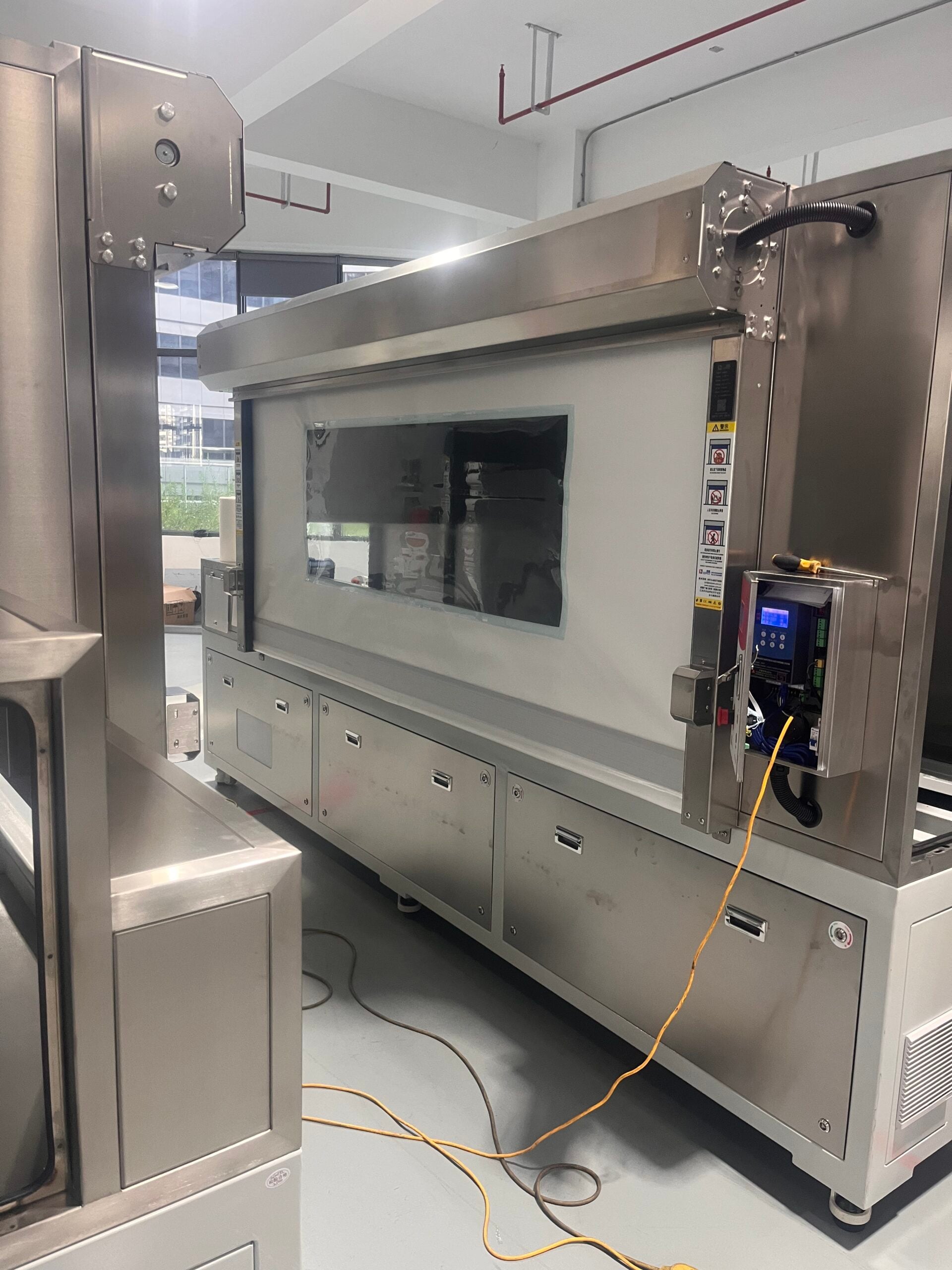
Yes. Conventional PVC high-speed roll-up doors are also used as equipment enclosure doors in automated manufacturing facilities. They are particularly useful for replacing large traditional hinged swing doors on industrial machines and production equipment.
Large swing doors require considerable clearance and can be inconvenient in compact production areas. PVC roll-up doors open vertically, saving floor space and allowing easier access for equipment loading, material transfer, and routine maintenance.
Their fast opening and closing speeds can also help reduce waiting time in automated production cycles. Common applications include robotic workstations, automated assembly lines, packaging machinery, and large equipment enclosures.
However, not every PVC high-speed door is suitable for safety-related machine guarding. Where hazardous machinery is involved, appropriate safety-rated interlocking, access control, and validated machine stopping functions must be incorporated into the overall protection system.
Where Are These Doors Used?
Applications include robotic assembly cells, handling stations, enclosed welding workstations, and material-transfer openings. Vertical movement preserves floor space; frequent opening supports short loading intervals when the safety sequence permits access.
Welding spatter, hot particles, ejected parts, and optical radiation require different performance evidence. Verify both the curtain and viewing window against the actual exposure.
The SEPPES FlexShield Approach
SEPPES positions FlexShield protective high-speed doors for robot workstations, welding booths, and automated equipment areas. Its catalogue describes protective curtain options, automation interlocking, and configuration-dependent speeds of 1.5-2.0 m/s. Treat that speed as a catalogue reference; confirm the selected opening size, curtain, duty cycle, and control sequence with SEPPES.
For industrial machine protection doors, ask for documented performance against the actual process hazard. Flame-retardant material is not a fire-resistance rating, and an anti-glare window does not establish laser protection. Fume control also requires suitable extraction. The final guarding system needs validation by the responsible machine integrator.
What Should Buyers Check Before Ordering Machine Protection Door?
Define the Process and Access Pattern
Provide a cell layout, opening dimensions, part envelope, and available headroom. Describe whether people reach through the opening or enter fully. Record peak cycles per hour, operating shifts, loading time, and expected stopping time. Faster door travel only helps when it reduces the complete access cycle without compromising protection.
Agree on Controls and Maintenance
Specify safety functions, locking, fault response, reset location, and the machine interface. Distinguish production communications from safety-related signals. Confirm service access, spare curtains, and inspection requirements.
Before handover, test access requests, obstructions, power loss, restart behavior, and relevant faults. During service, inspect the curtain, guides, attachments, and interlocks. Work involving hazardous energy requires isolation; opening the door is not isolation.