SEPPES Interlocking Industrial Door Systems
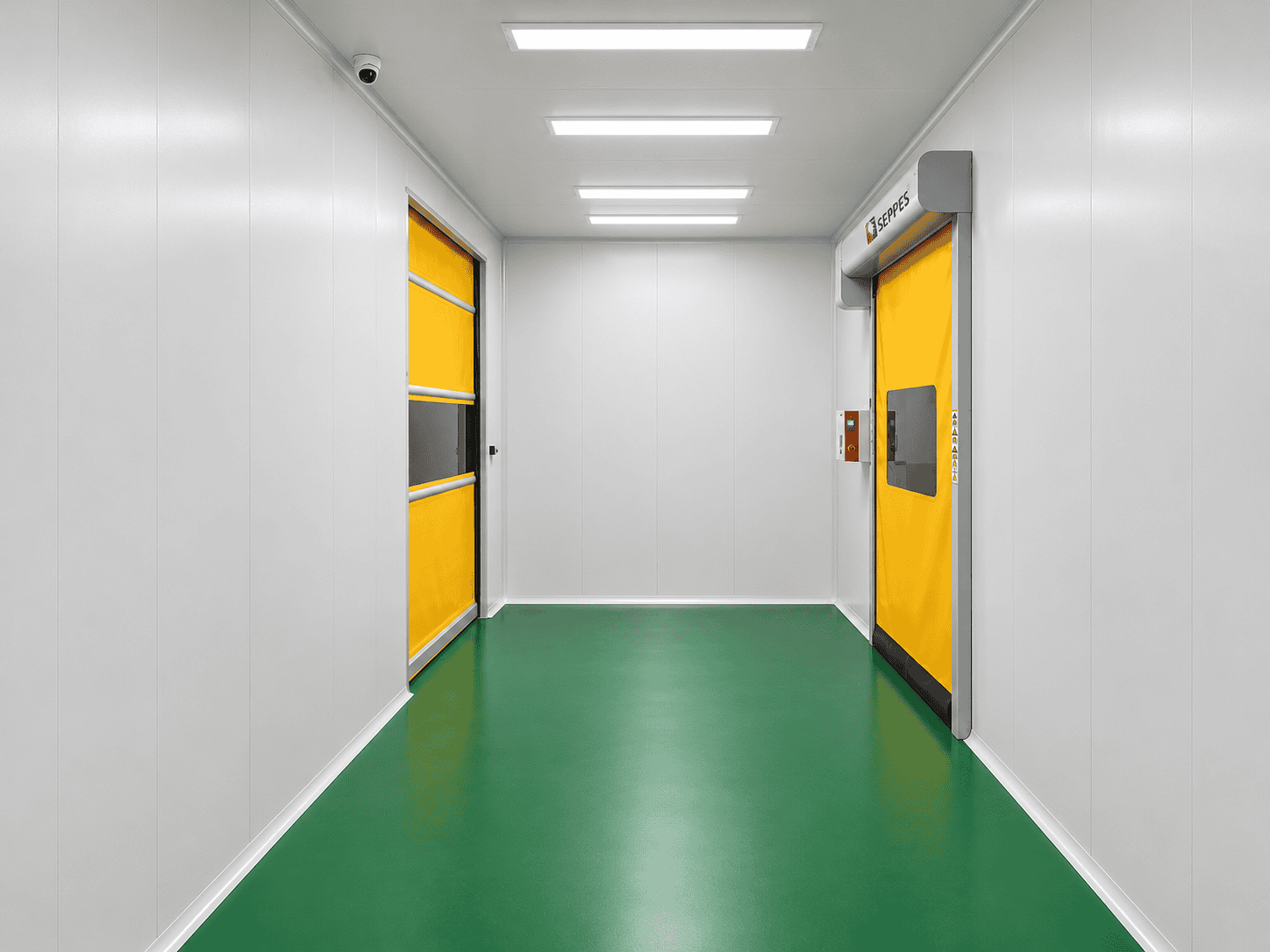
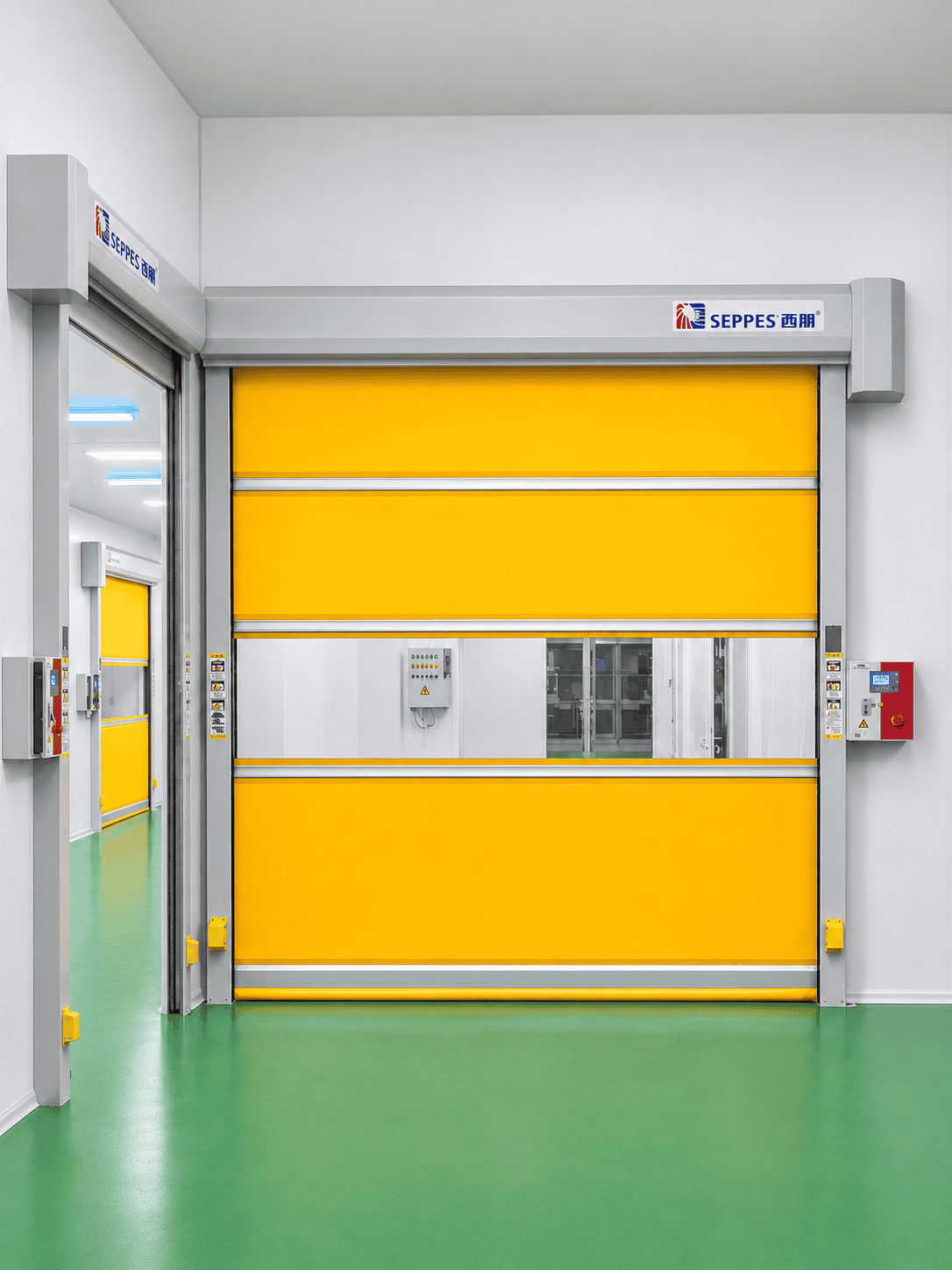
Interlocking industrial door systems coordinate two or more doors so that, during normal operation, a requested door opens only when the other doors on its route are confirmed closed. SEPPES configures each industrial door interlock around the traffic route, using high-speed roll-up doors and PLC control for cleanroom airlocks, material transfer and indoor production zones.
Intertravada
Coordinate two or more doorways on one route.
Position feedback
Confirm a conflicting door is closed before releasing the next.
Pressure checks
Use a pressure or dwell-time condition where required.
Defined recovery
Plan for a blocked doorway, feedback fault or power loss.
Cleanroom Door Interlock
Desafio
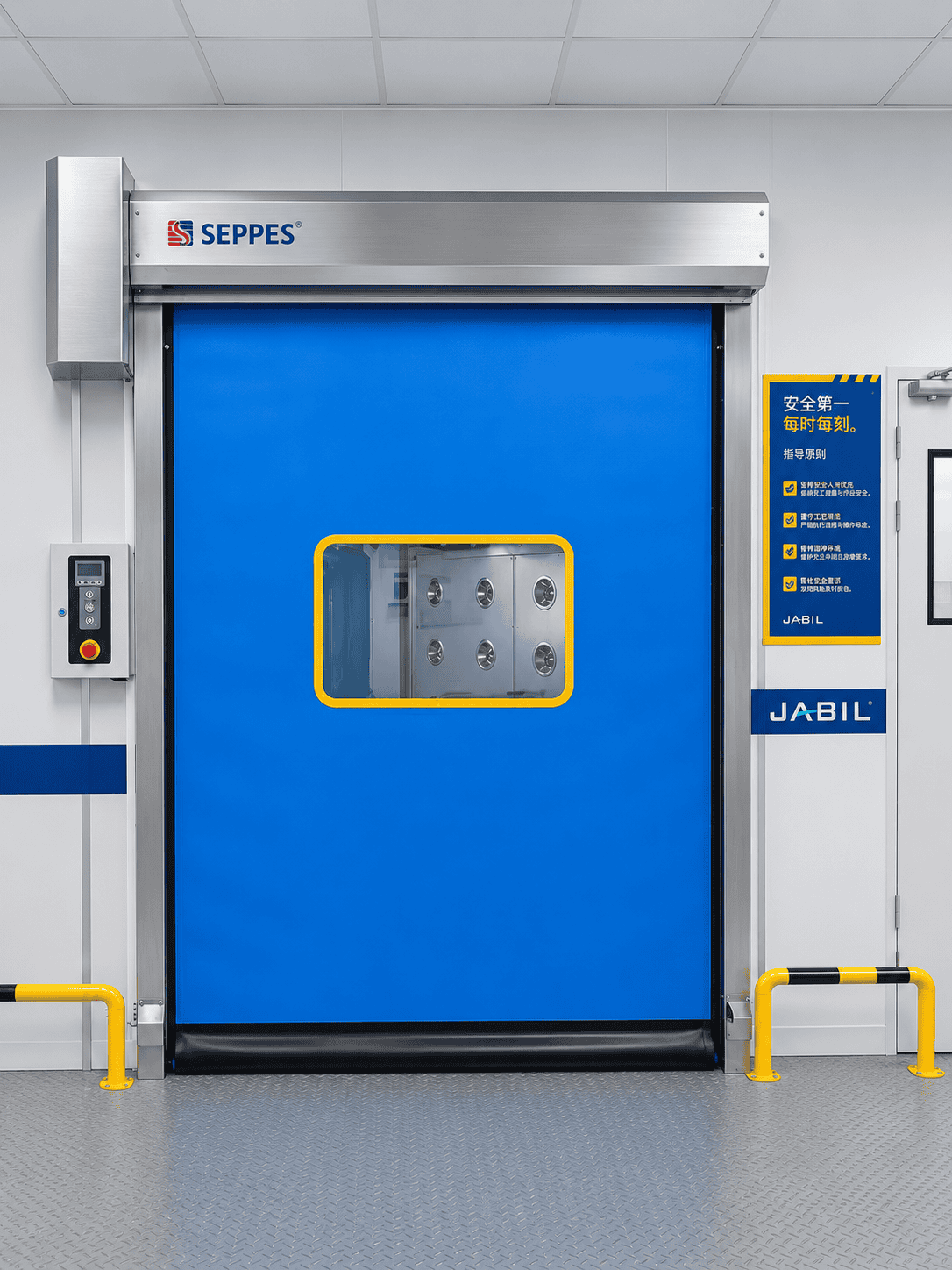
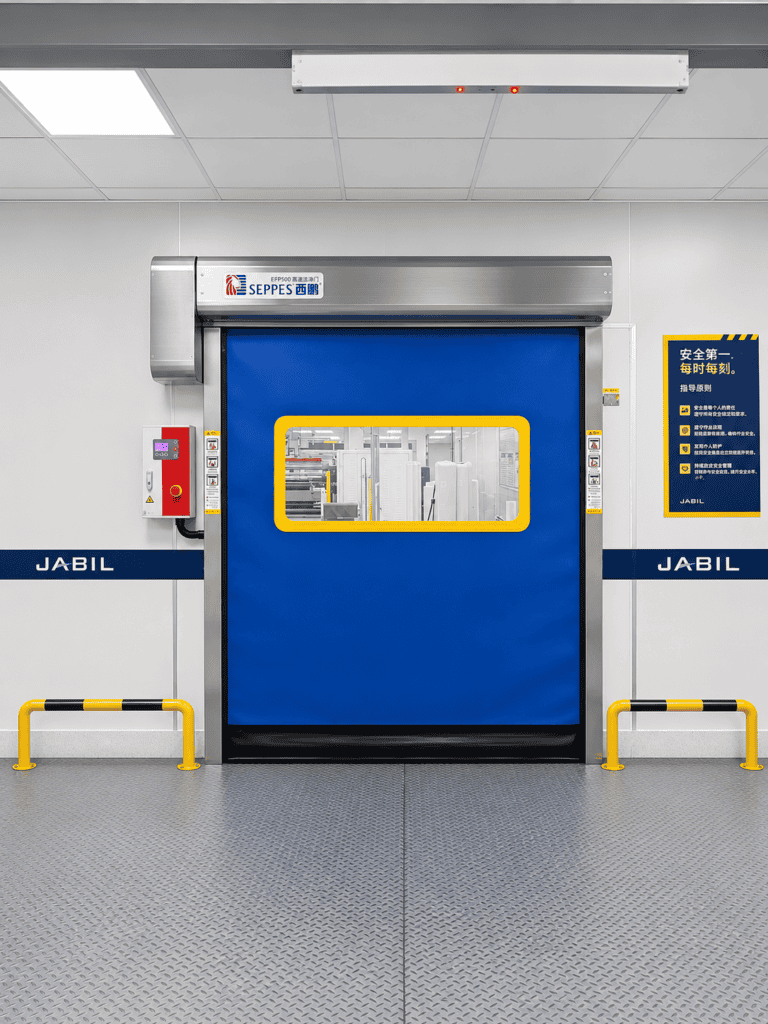
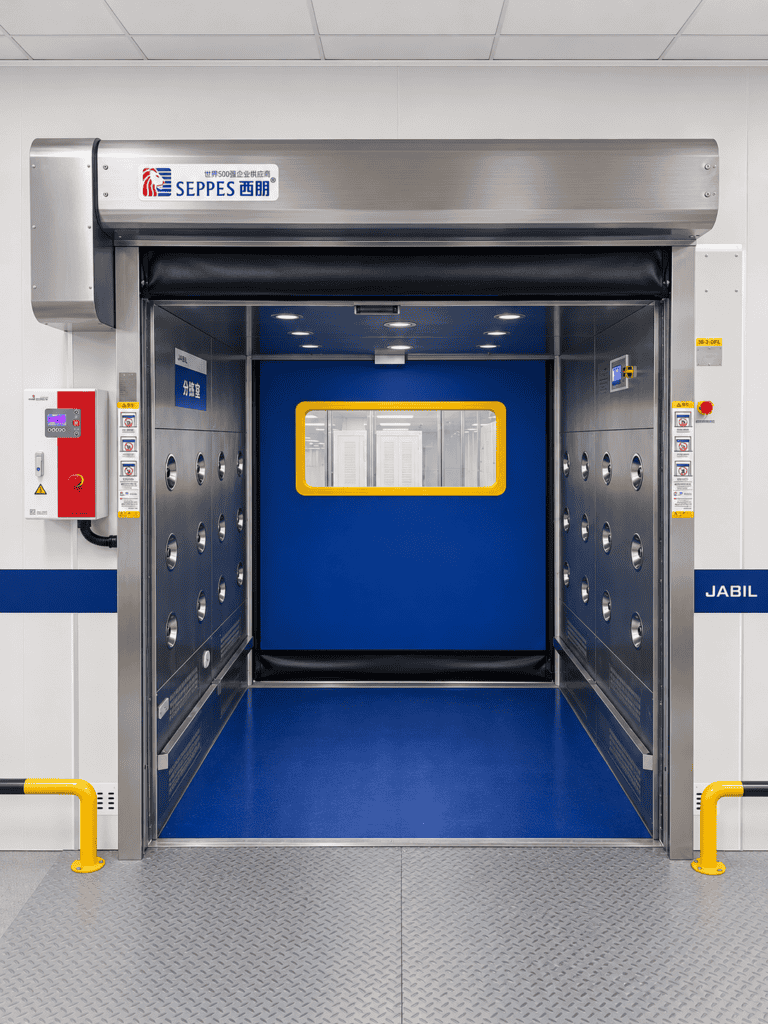
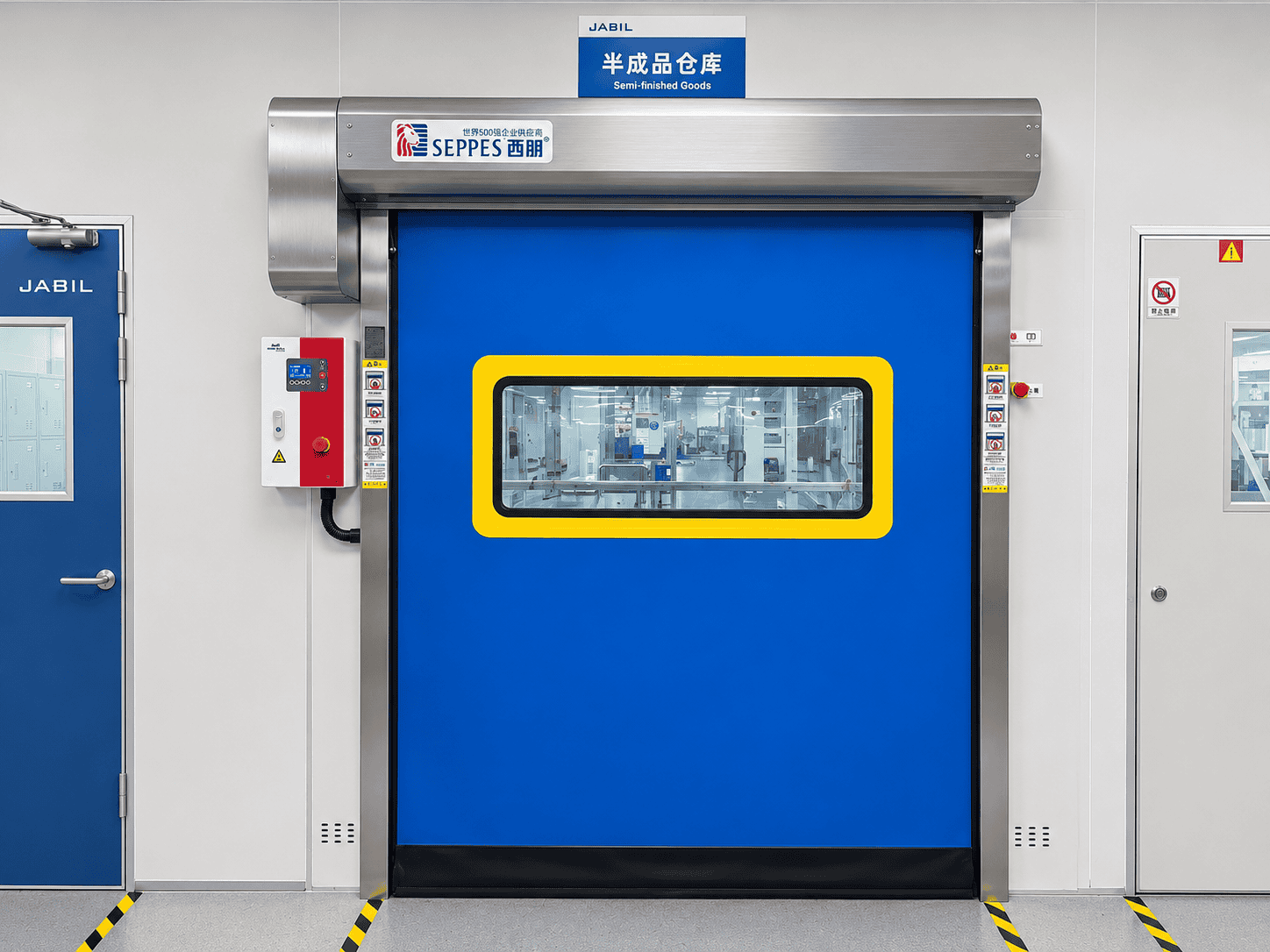
Green Point (China) Technology Co., Ltd. specified two high-speed cleanroom doors for Jabil’s die-cutting site in Suzhou Industrial Park. The doors needed to interlock with the air shower at the cleanroom entrance.
Solução SEPPES
The specification called for updated zipper guides, 2.5 mm curtains and vision windows with yellow warning edging.
Resultados
The interlock links the high-speed door controls to the air shower so that door opening can be coordinated with the cleanroom entry sequence.
How an Industrial Door Interlock Works
The PLC or dedicated interlock controller checks door position feedback before granting an opening request.
1. Request access
A touchless switch, access reader or line controller requests a specific door.
2. Check the route
Confirm that conflicting doors are closed and any configured pressure, dwell-time or equipment checks have passed.
3. Open the selected door
Grant the opening while other doors on the route remain on hold.
4. Close and release
Check passage clearance. Once the door controller reports fully closed, the next eligible request can proceed.
SEPPES industrial door interlock For sale
Compare the curtain, seals and available clearance at each opening. Specify a door for the environment it separates and coordinate its controls with the rest of the route.

"Smart-Start" Series-High Speed Roll-Up Door
Choose seppes industrial high-speed roll-up doors for frequent indoor passage between workshops, packing areas and material buffers. Compare brush seals and a flexible PVC curtain against the required level of separation.
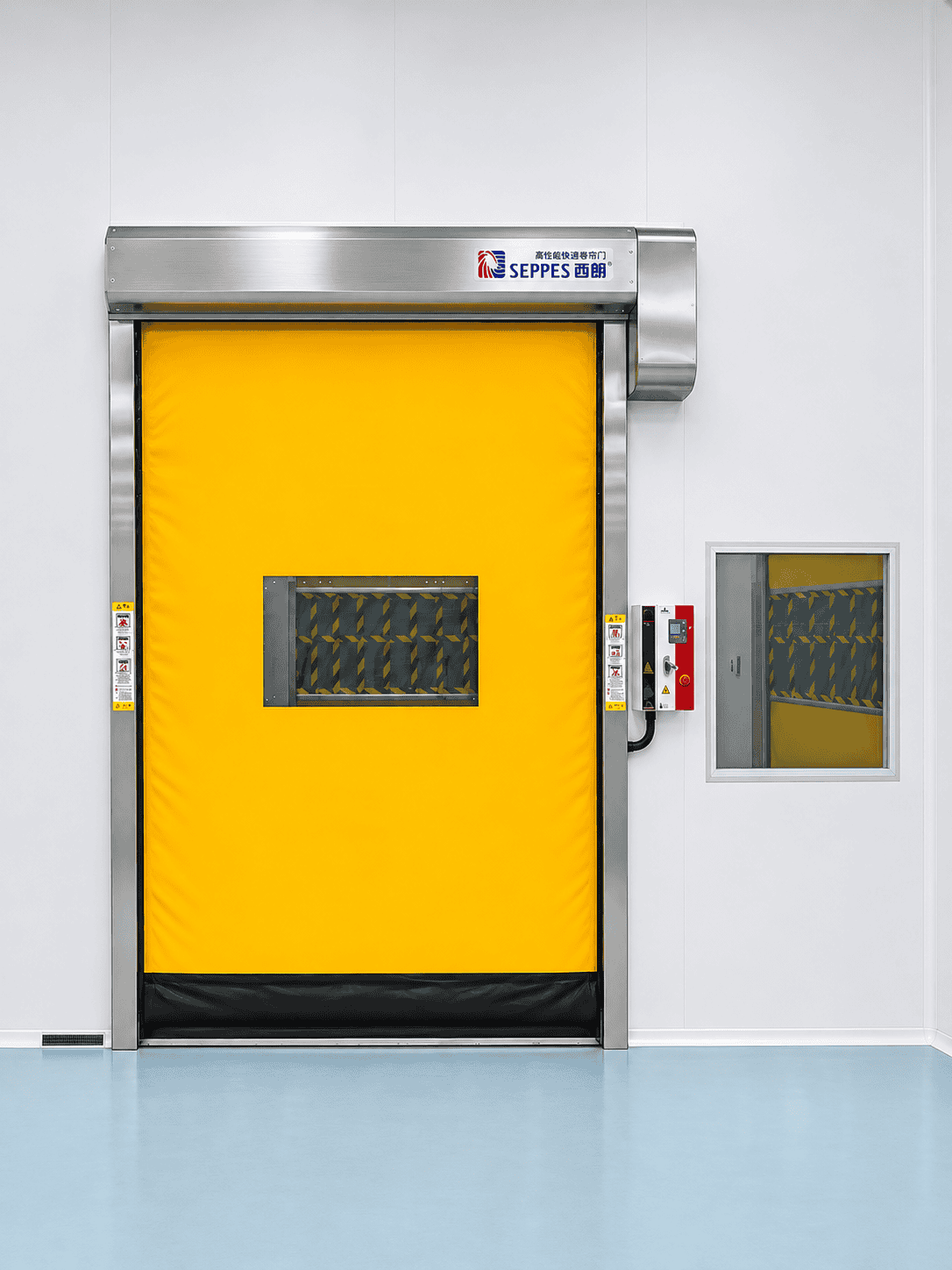
"Dust Free"Series-High Speed Zipper Door
SEPPES offers self-repairing zipper doors for cleanrooms. Confirm how curtain recovery and the interlock reset should work together after an impact.
Advanced Safety Features for interior high speed fabric doors
As portas industriais SEPPES incorporam múltiplas medidas de segurança para garantir a proteção do pessoal e fluxos de trabalho robóticos seguros.
Sensor de Presença
Get a Proposal for Your Interlocked Doors
Send a layout showing each opening, the direction of travel, and any pressure or equipment checks. SEPPES can help select the high-speed roll-up doors and define what each door controller needs to exchange with your PLC.
clean room door interlock system FAQs
1. Can automatic cleanroom doors open at the same time?
During normal operation, a clean room door interlock system holds a conflicting door closed until the active door is confirmed closed. Any emergency behavior follows the approved site procedure.
2. Can a roll-up door interlock with an existing swing door?
Yes, when the existing door hardware and controller can provide reliable position feedback and accept the required release, hold or monitoring signals. Confirm the interface before ordering.
3. Can an airlock use fast roll-up doors with access control?
Yes. A card reader can confirm who is allowed to enter, and the interlock controller can then check whether the requested route is available. Decide whether to queue or reject simultaneous requests during design.
4. What should I confirm before cleanroom door installation?
Share opening sizes, headroom, side clearance, wall finishes, washdown and pressure conditions, door hardware and expected traffic. For new or retrofit cleanroom roll-up doors, also provide the planned route, I/O list and fault recovery requirements.