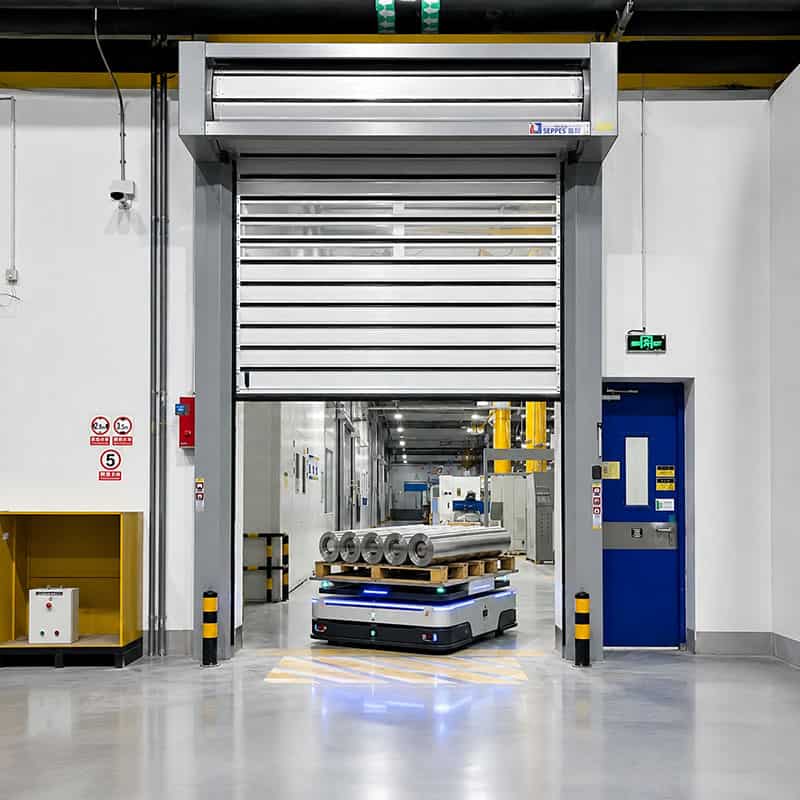
AGV Interlocked Industrial Door Solution
Fast
Rapid-door configurations for high-frequency passages
Interlocked
Door state can be coordinated with upstream equipment
Bezpieczniejszy
Layered sensing and configurable access logic
High-cycle
Built for millions of cycles, reliable operation for automated factories
Wyzwanie
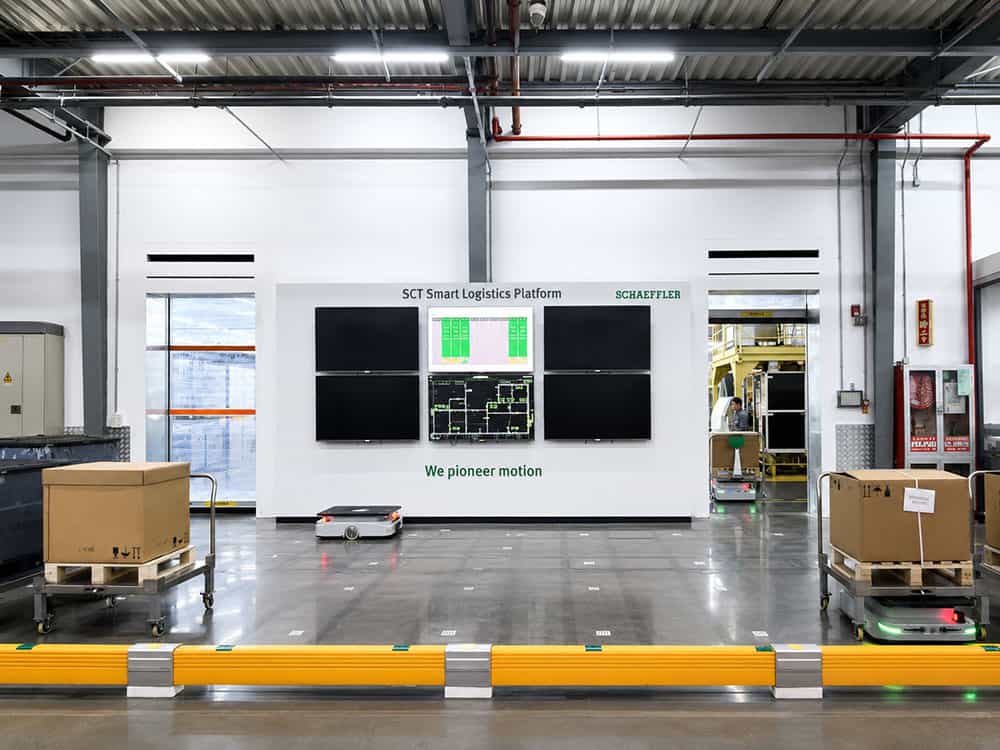
Schaeffler needed a compact and reliable door solution for its AGV transportation area.
The original Hörmann doors were too high, occupying excessive installation space and affecting the automation layout.
Rozwiązanie SEPPES
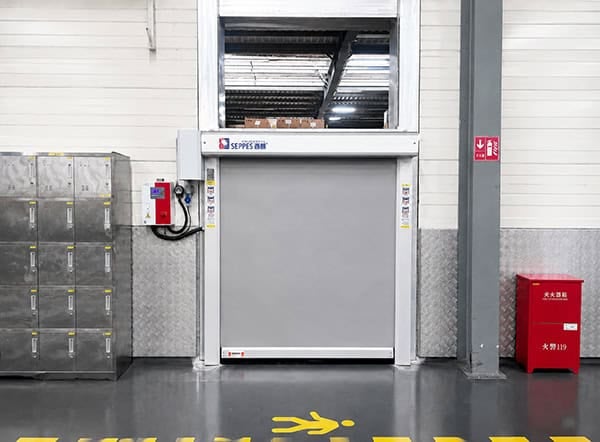
SEPPES provided protective high speed doors (W1600 × H1600 mm) to replace the original doors.
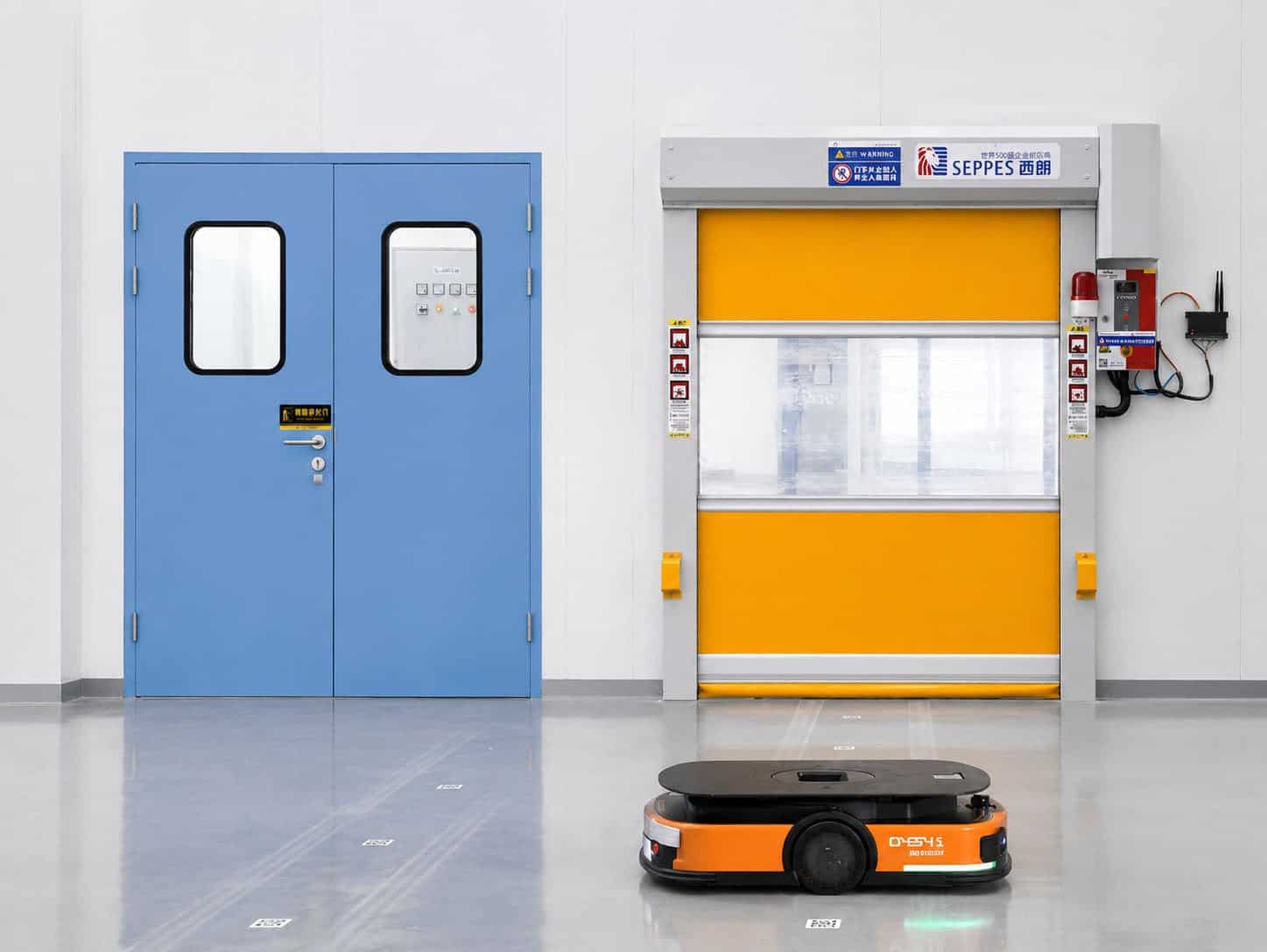
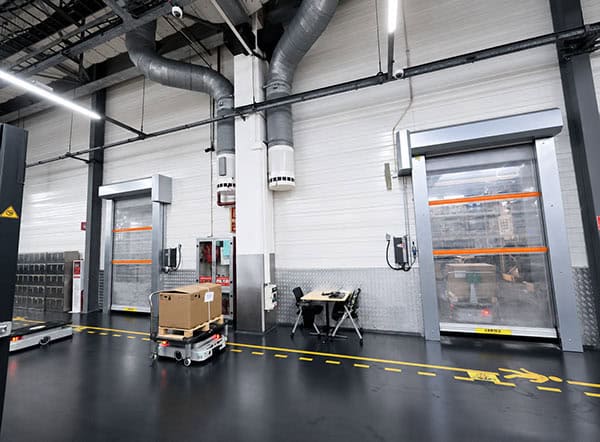
The compact design saves installation space and supports AGV signal control for automatic opening and closing, ensuring smooth vehicle passage and safe area separation.
Wyniki
- Successfully replaced original Hörmann doors
- Optimized installation space
- Enabled automatic AGV operation
- Improved safety between equipment and personnel
- Enhanced smart factory efficiency
SEPPES AGV Interlocked Industrial Door Work Flow
Typical logic is tailored to the AGV controller, traffic rules and safety assessment for the installation.
1. AGV approaches
The system receives an authorized arrival or route request.
2. Safety check
Configured interlocks verify that the opening zone is ready.
3. Door opens
The rapid door opens and reports its permitted state to the linked system.
4. Pass & reset
After passage and clear-zone confirmation, the door closes and the route resets.
SEPPES AGV high speed door For sale
AGV integration is an application solution, not a single model. The opening, environment and safety goal determine the door series.

Roller Shutter Door
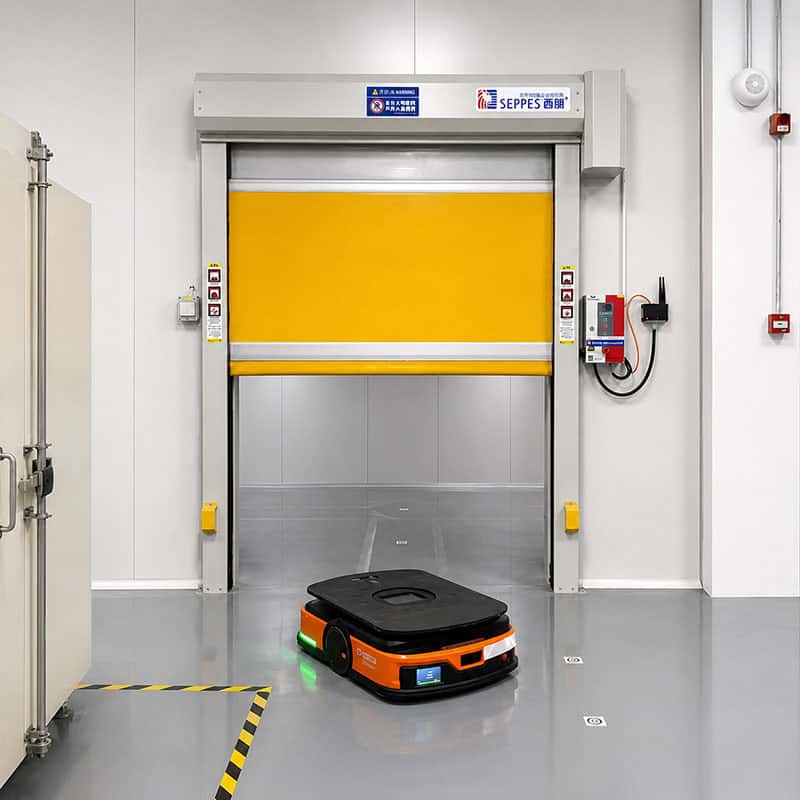
Roller Shutter Doors integrated with AGV systems enable automatic opening and closing through signal communication, ensuring smooth and uninterrupted material flow. They provide fast operation, reliable safety protection, and help improve automation efficiency in smart factories.

high speed warehouse doors
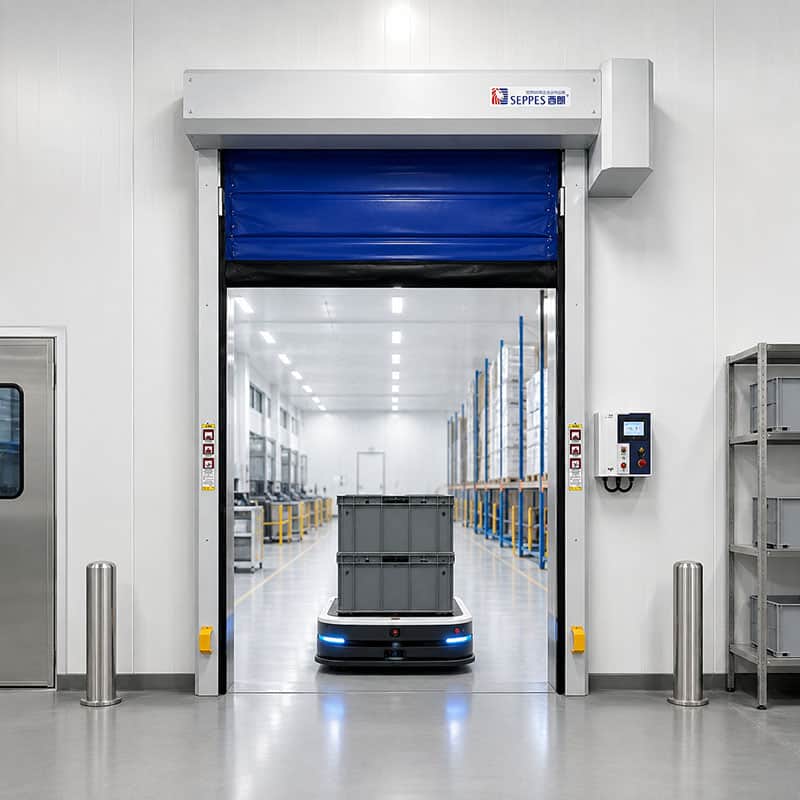
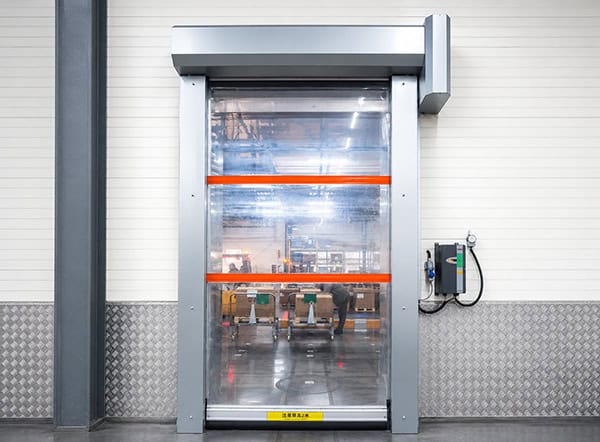
PVC high speed doors integrated with AGV systems enable automatic opening and closing through signal communication, ensuring efficient and seamless material transportation. They provide fast operation, dust control, and safe separation between automated equipment and personnel in industrial environments.

Cool Room doors
Cool room doors integrated with AGV systems enable automatic access control, ensuring smooth and efficient material handling in cold storage areas. They minimize cold air loss, maintain stable temperatures, and improve energy efficiency during frequent AGV operations.

clean room doors
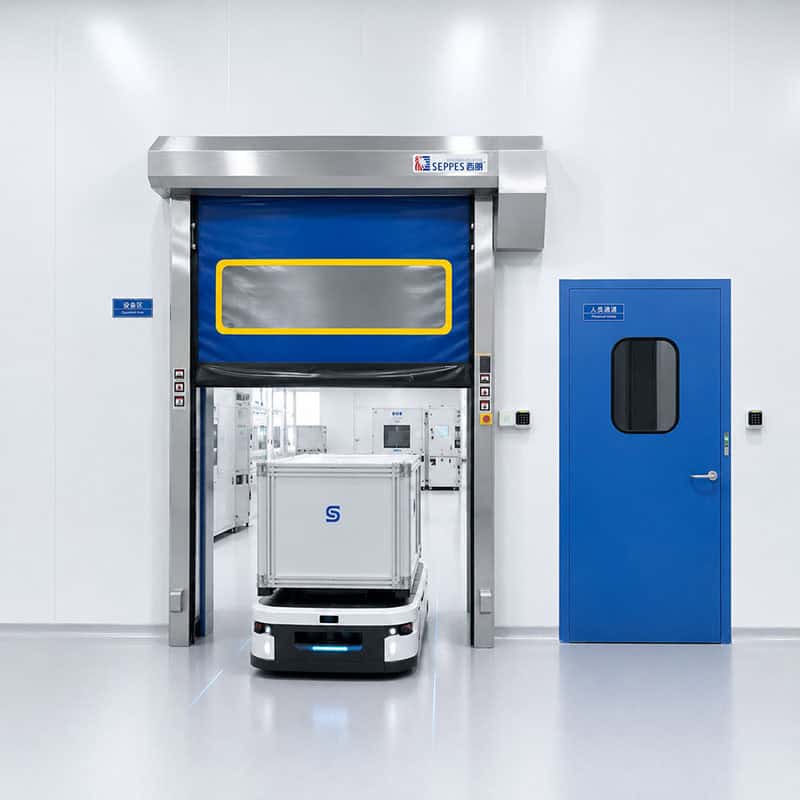
Clean room doors integrated with AGV systems enable automatic opening and closing, ensuring efficient material transfer while maintaining controlled environments. They help reduce dust contamination, maintain air pressure stability, and improve automation efficiency in cleanroom applications.
Advanced Safety Features for automated industrial door
SEPPES industrial doors incorporate multiple safety measures to ensure personnel protection and secure robotic workflows.
Czujnik obecności
Build a smoother AGV crossing with SEPPES.
Send your opening size, route drawing and automation requirements for a tailored door proposal.
AGV high speed coiling door FAQ
1. Will the door press on the conveyor belt when closing?
SEPPES high speed automotive doors are designed with conveyors, materials, and suspended items in mind. We offer two solutions:
- Solution 1: Install light curtains or photoelectric sensors on both sides of the frame. The door will not close if the belt or materials haven’t fully passed, preventing collisions.
- Solution 2: For fixed conveyor positions, we can customize a bottom groove or split sealing strip on the curtain to avoid the belt while maintaining sealing elsewhere.
Our engineers will measure on-site and confirm installation drawings to ensure the belt is never damaged.
2. The door opens and closes hundreds of times per day. How long will the motor last?
SEPPES as industrial doors manufacturers use German servo motors rated for 800–1000 cycles per day and continuous operation over 10 years (actual lifespan depends on environment; project references available).
If a motor fails, it’s recommended that local service teams handle replacement for safety and parameter matching. Alternatively, if your site has an electrical engineer, we provide a spare motor and step-by-step replacement guide.
3. Can the door detect if there is a load on the conveyor and stay open while products pass?
Yes. SEPPES doors can integrate with your conveyor control system:
- Simple version: Sensors at the conveyor entrance keep the door open while products pass; the door closes after a set idle time (adjustable, e.g., 5–10s).
- Advanced version: Direct PLC or MES integration to track conveyor activity and automate “door moves with line, closes when line stops.”
We have implemented this for automotive parts and e-commerce logistics centers and can provide reference videos.
4. What happens if the curtain is hit? Do I need to replace the whole door?
Our soft-fast doors feature a self-resetting collision design:
- Minor collisions: Curtain pops out of the track; simply reinsert manually in one minute.
- Severe damage: Only the curtain needs replacement; the motor, track, and control box remain intact. Replacement is typically 2–3 days, costing far less than a full door (usually 15–20% of full price).
Flexible crash columns and guide rollers absorb most impact, minimizing damage risk.
5. Does the door leak air in air-conditioned or heated workshops?
SEPPES industrial roller door use a four-side multi-layer sealing system:
- Top & sides: EPDM rubber seals, elastic and aging-resistant.
- Bottom: Safety airbag bottom edge, adapts to ±5mm uneven floors.
- Door panel: 40mm high-density polyurethane core (λ = 0.022 W/(m·K)).
Tests show over 85% reduction in airflow with a 20°C temperature difference and 5 m/s wind. For cleanrooms, we can provide ISO 14644 air-tightness reports.
6. What if the door suddenly won’t close? Can the production line continue?
Multiple emergency mechanisms prevent line stoppage:
- Manual release: Hand chain or crank lifts the curtain if power fails.
- Emergency button: Forces door open regardless of sensor logic.
- Fault self-diagnosis: Display shows error codes for on-site reset (e.g., blocked sensors, lost limit switch).
7. Can your doors interface with our existing central control system?
Yes. Standard dry contact (passive) signals are compatible with most PLCs, including Siemens, Mitsubishi, Omron, Rockwell, Delta, Inovance, etc.
- Switch signals: Open/close commands with door position feedback.
- Communication protocols: Modbus RTU/TCP for operation data and fault codes; can integrate with SCADA or MES.
Detailed wiring diagrams and protocol documents are provided.