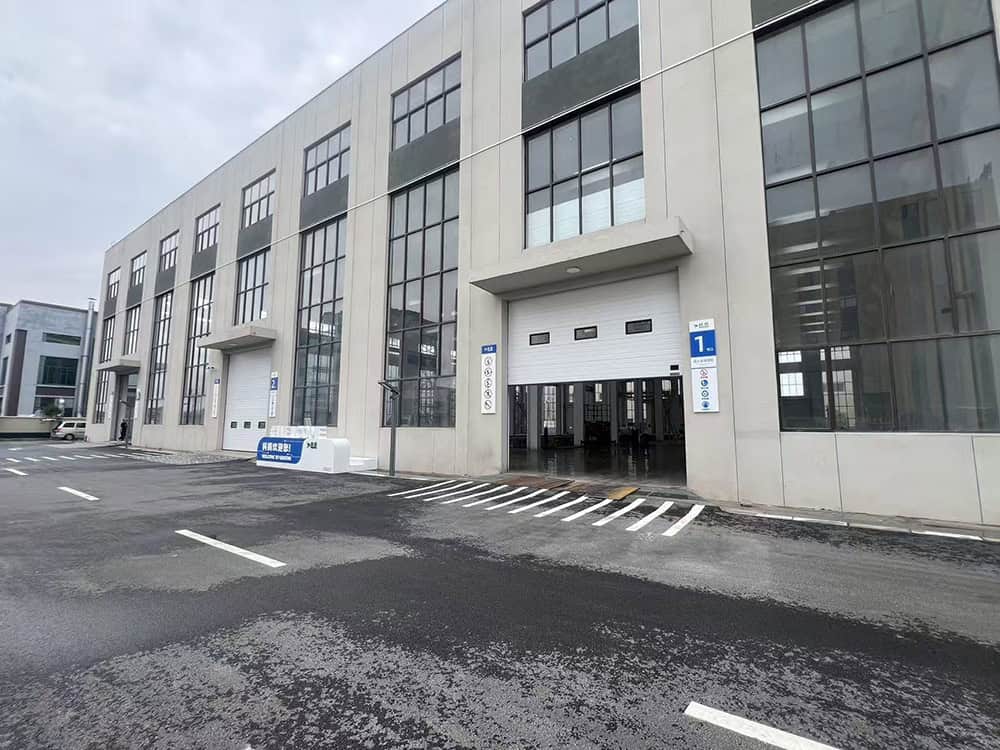
Industrial Sectional Door Upgrade for a New Environmental Equipment Factory
SEPPES installed an insulated industrial sectional door for an environmental purification company. The solution improves thermal insulation, dust control, and operational efficiency while providing reliable access for daily logistics and helping maintain a cleaner, safer working environment.
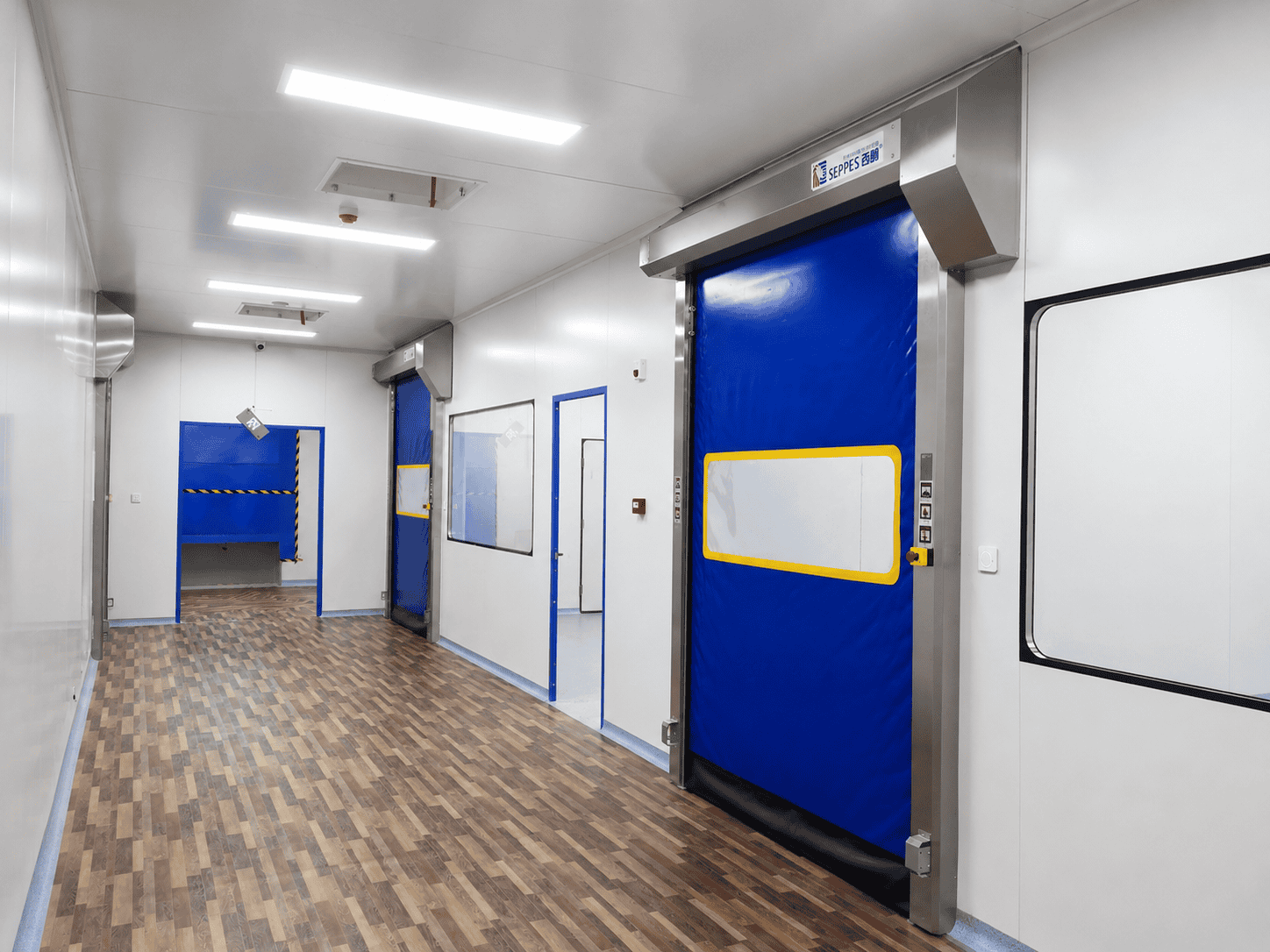
Clean Room Doors for Pfizer Pharmaceutical Facility
SEPPES configured high speed clean room doors for a Pfizer cleanroom operating at a 30 Pa pressure differential. The compact door system combines a 1.2 mm curtain, SUS304 stainless steel structure, steel swing-door interlocking, forced override control, touchless opening, backup power, and stainless steel closure plates around the head box.
Spiral Door Upgrade for SCHNEEBERGER Workshop
After an on-site supplier evaluation, SCHNEEBERGER selected a SEPPES high speed spiral door solution for an internal workshop renovation. The customer wanted a more refined rigid-door appearance than its previous PVC high speed doors, together with frequent operation, pedestrian-vehicle detection, and integration with its own access control system.