Export to RCEP Countries  |  Import Tariffs as Low as 0%  |  Contact Us for Details*

Robot Arm Interlocked Industrial Door

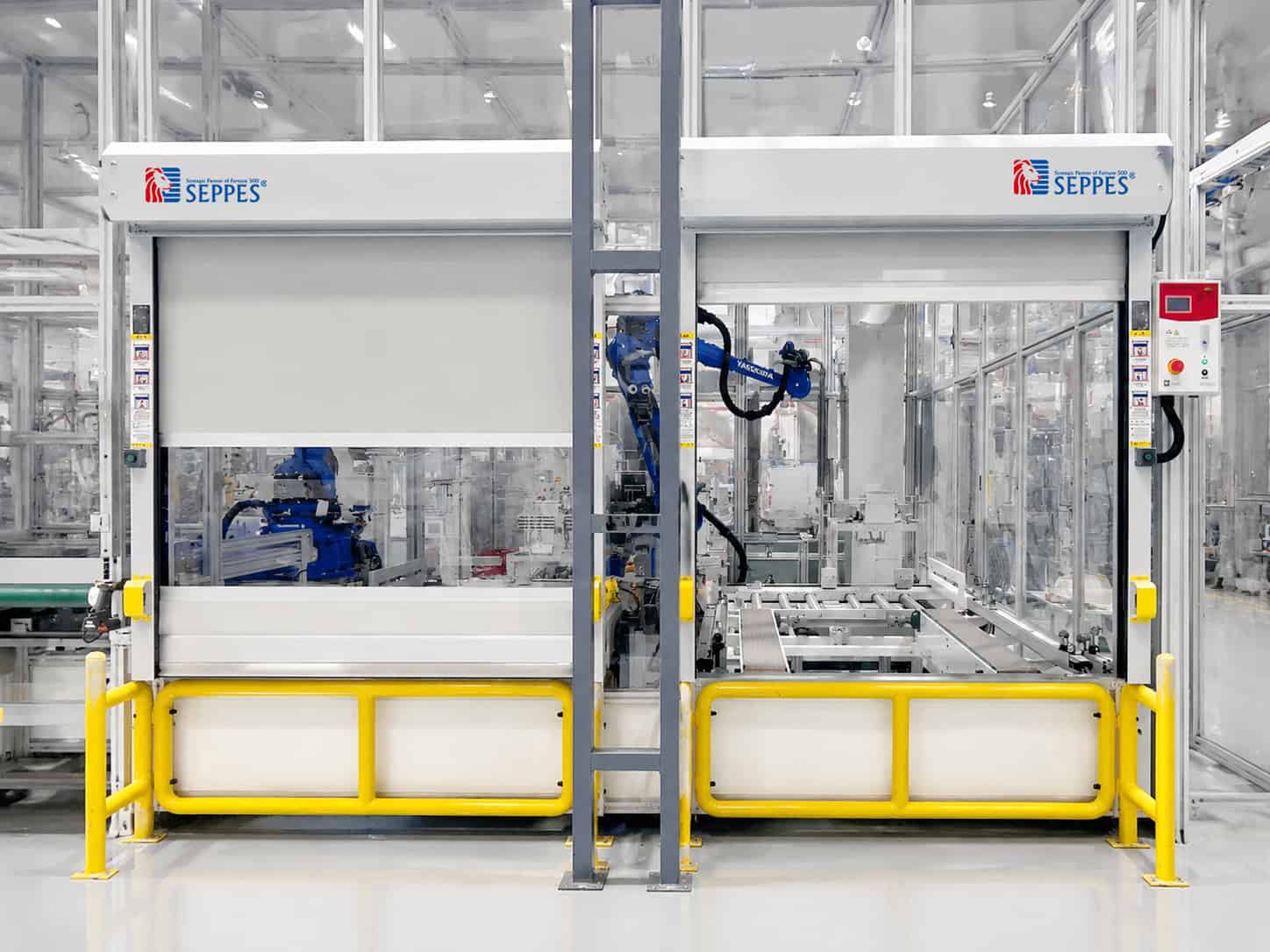
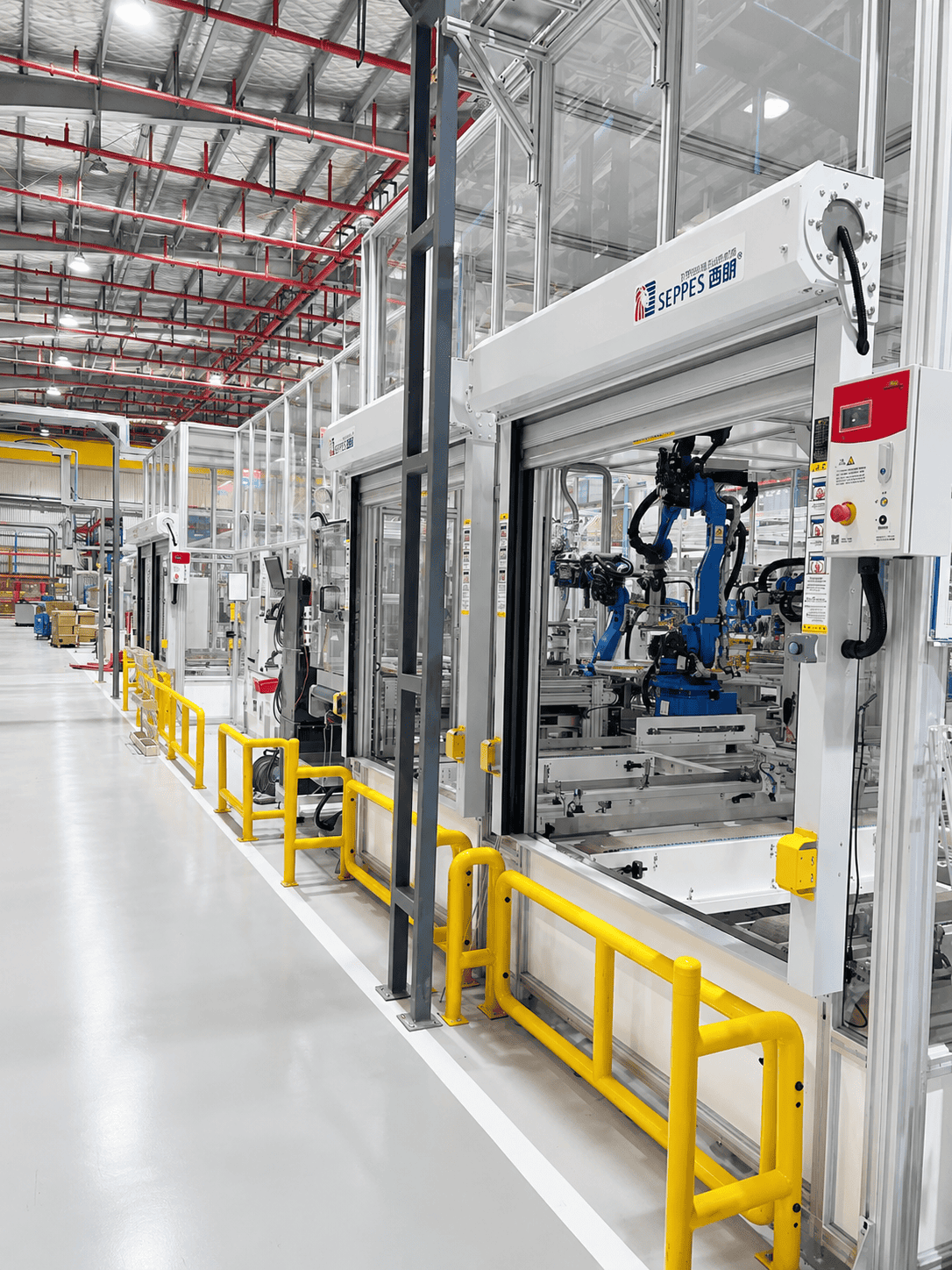
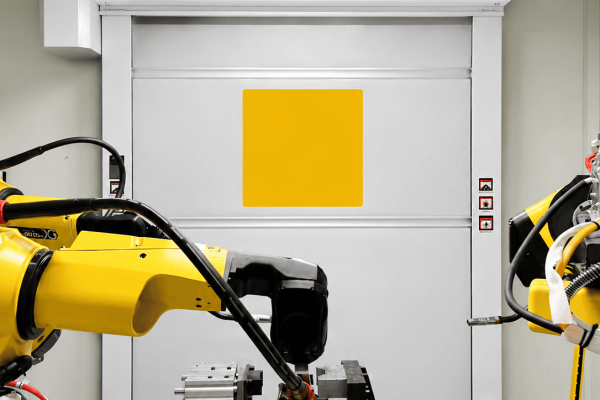
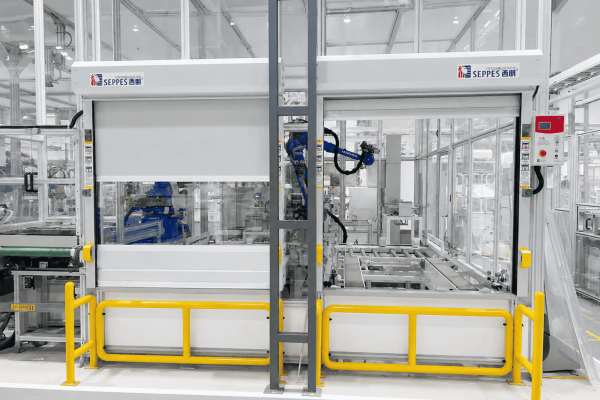
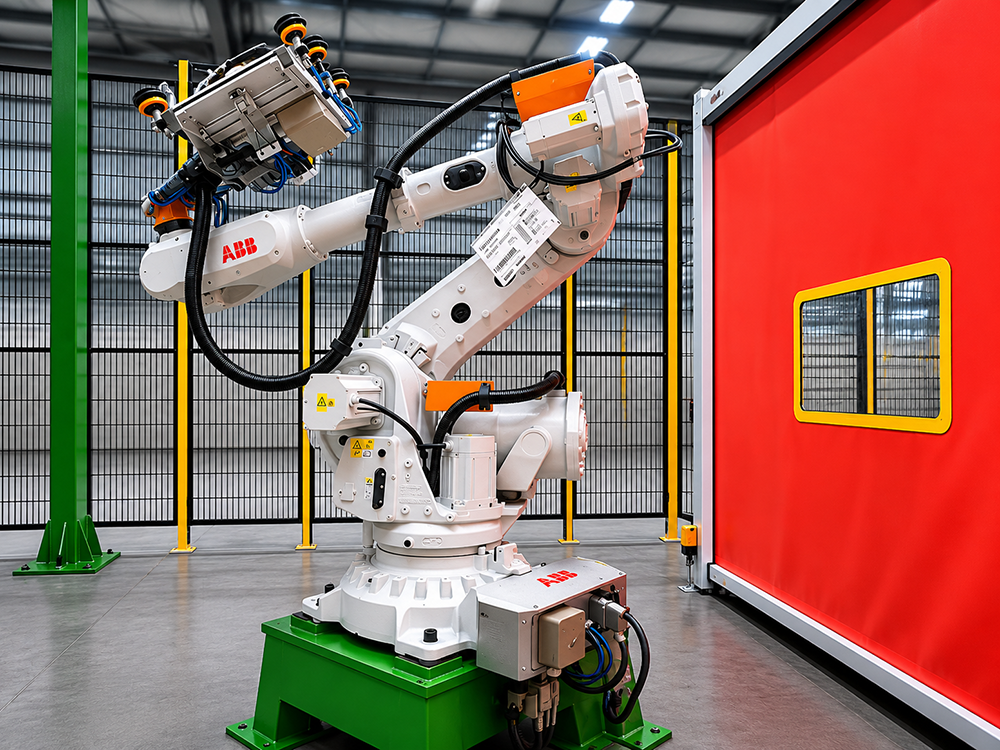
The SEPPES robot arm interlocked industrial door coordinates a protective high speed door with robot and PLC signals, helping control access to robotic work cells, welding booths and automated equipment zones.

High-cycle automation

A high speed door for robot cell access reduces waiting between permitted cycles while soft start/stop and servo control support repeatable door movement.

Process-linked movement

A PLC interlocked industrial door can exchange operating commands and state feedback with the robot cell controls. Final signal mapping is confirmed by the project integrator.

Process-linked movement

A PLC interlocked industrial door can exchange operating commands and state feedback with the robot cell controls. Final signal mapping is confirmed by the project integrator.

challenge

Foxconn required high-speed doors integrated with its AGV system to improve logistics efficiency and ensure safe separation between automated vehicles and operators.
The doors needed to support signal communication for opening, closing, emergency stop, and fault feedback.

SEPPES  Solution

SEPPES supplied 40 PVC high speed doors with AGV integration.Features included:
AGV system control interface
4 communication signals: Open / Close / Emergency Stop / Fault Feedback
1.5kW motor for high-cycle operation
Extended motor and safety light curtain cables for remote control cabinet installation
Screw-fixed photoelectric sensor and door cover design for easier maintenance

Results

  • 40 set PVC high speed doors installed in Foxconn smart manufacturing facility
  • Seamless integration with AGV transportation system
  • Automated door opening and closing synchronized with material handling
  • Improved safety between automated equipment and personnel areas
  • Enhanced reliability for continuous industrial operation

SEPPES industrial robot safety door Work Flow

A robot safety interlock door supports process separation, but it remains one component of the complete safeguarding and risk-reduction solution.

1. Robot reaches safe state

The linked system establishes the specified condition before access is requested.

2. Open request accepted

The equipment interlock door receives an authorized command through the agreed interface.

3. Door status confirmed

Fully-open or other required feedback is returned before the next permitted action.

4. Pass & reset

After the area is cleared, the door closes and the system completes its restart conditions.

robotic cell access door For sale

SEPPES FlexShield is intended for robot workstations, welding booths, equipment rooms and other automated high-risk isolation zones. Curtain, window, sealing and control options are selected for the actual process hazard.

Machine Protection Door

Machine Protection Door

Made with thick wear-resistant PVC curtain for impact, dust, and arc protection. Optional flame-retardant curtain for welding and high-temperature spark environments.

automatic rolling shutter door

automatic rolling shutter door

Built with insulated aluminum panels for strong sealing, sound insulation, and heat preservation. Suitable for complex production lines with limited installation space.

cold storage freezer doors

cold storage doors​

For cold rooms, warehouses, and food storage areas. They help reduce temperature loss and improve energy efficiency. The curtain is available in double-layer 0.8 mm material with aluminum foil air-cushion insulation.

Advanced Safety Features for automated industrial door

SEPPES industrial doors incorporate multiple safety measures to ensure personnel protection and secure robotic workflows.

Motion Sensor
Detects moving objects such aspeople, vehicles, and forklifts. When an object enters the detectionarea, the door opens automatically.
Flexible Bottom Safety Edge
When the door contacts an object, the flexible bottom or safety edgeabsorbs the impact and the door automatically reopens.

Presence Sensor

Detects whether there is any objectwithin the detection area(even if it is stationary).

Industrial automation safety door applications

Robotic welding safety door

A robotic welding safety door can help isolate sparks, spatter, glare and fumes around automated welding. Curtain and window suitability must be confirmed for the specific process.

Laser and special-process isolation

A laser safety door or robot cell barrier door requires application-specific material review. Do not assume a standard curtain provides the required laser-protection classification.

Machine tending and handling

A machine guarding door or automated machine safety door can coordinate access to loading, unloading and part-transfer zones around robotic machinery.

Automated production lines

A robotic production line door, robot enclosure door or automated equipment isolation door can separate cells while supporting the planned material and maintenance flow.

Build controlled access around your automation cycle.

Send the cell layout, process hazard and signal requirements for a tailored SEPPES door proposal.

Robot arm interlocked industrial door questions

Can the industrial door stop or start the robot?

The door can exchange defined signals with the robot or PLC, but the safety function and permitted restart logic must be designed and validated by the responsible robot-system integrator. A standard door status signal should not be assumed to be safety-rated.

2. Which SEPPES door is recommended for a robot workstation?

FlexShield protective high-speed doors are the primary recommendation for robot cells, welding booths and higher-risk automated zones. Smart-Start may suit lower-risk internal logistics separation, while a rigid protective solution may be considered where impact, wind or security requirements are different.

3. Can the door curtain block welding sparks or laser light?

Protective FlexShield configurations can use curtains intended for sparks, spatter, heat and welding-related UV exposure. The actual process, temperature, radiation source and required protection level must be reviewed before selection. A standard curtain should never be treated as universal laser protection.

4. What information is required for a proposal?

Provide the opening size, robot-cell layout, process description, hazard assessment, access sequence, daily cycles, expected command and feedback points, safety devices, environment and available installation clearance.

5. Is a robotic work cell door a complete guarding system?

No. The robotic work cell door is one part of the safeguarding architecture. The complete solution may also involve fencing, scanners, interlocks, safety controls, emergency stops, procedures and validation selected by the responsible system designer.

Scroll to Top