

Choose among the different types of high-speed doors by matching the opening mechanism, door material and operating configuration to the conditions at each doorway. A freezer door can use a roll-up or sliding design, and a PVC roll-up door can be configured for either push-button operation or AGV traffic. Start with the physical opening, then specify what the door needs to do during each cycle.
7 Types of High-Speed Doors by Construction
1. PVC High-Speed Roll-Up Doors
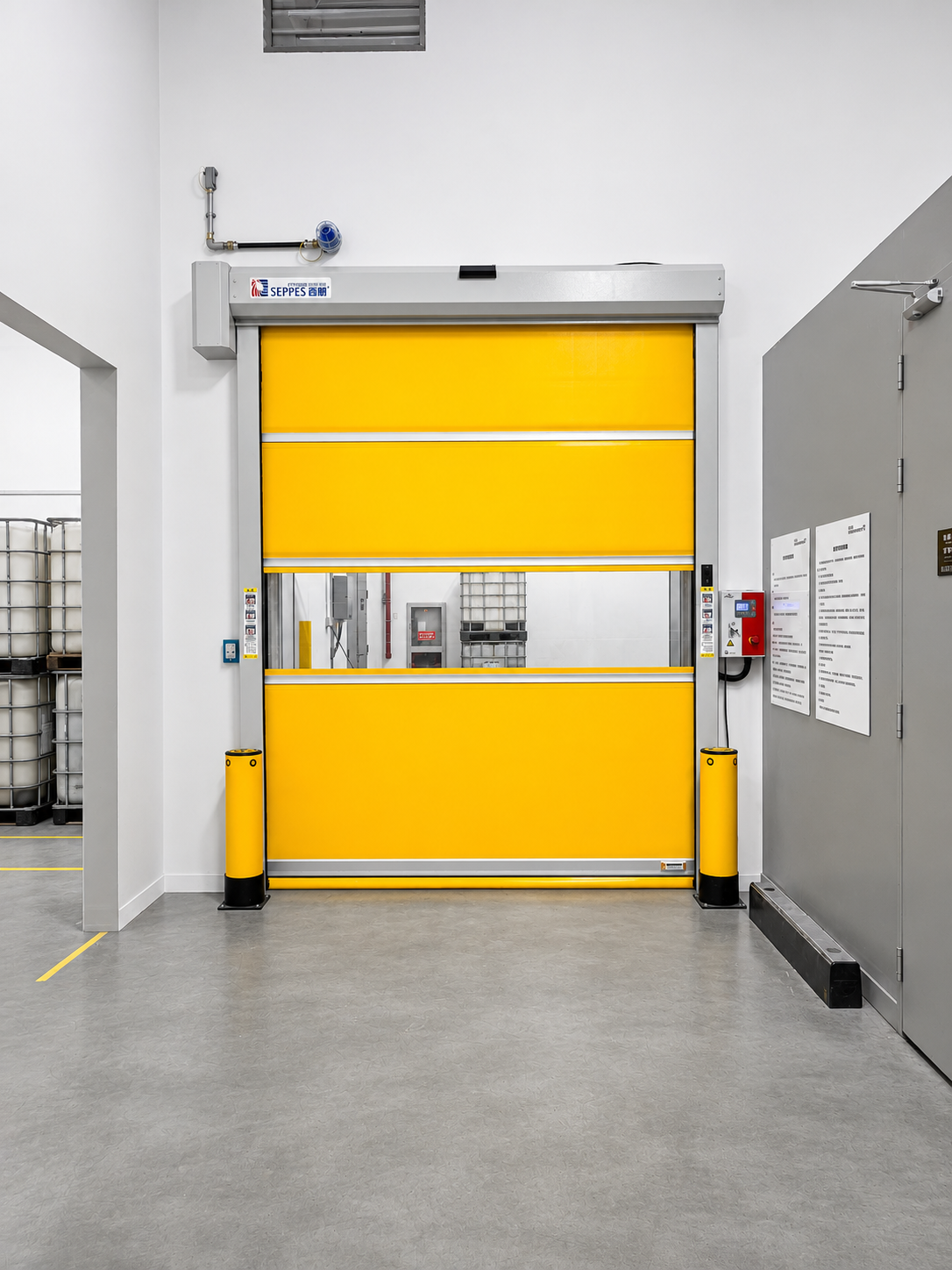
PVC high-speed roll-up doors belong to the family of fast roll-up doors. A flexible curtain winds into the head assembly to clear the opening. These doors suit frequently used internal passages between workshops, packing areas and warehouses. Check how often the door cycles, what passes through it and whether the guide tracks can sit clear of vehicle traffic.
2. Zipper-Sealed High-Speed Doors
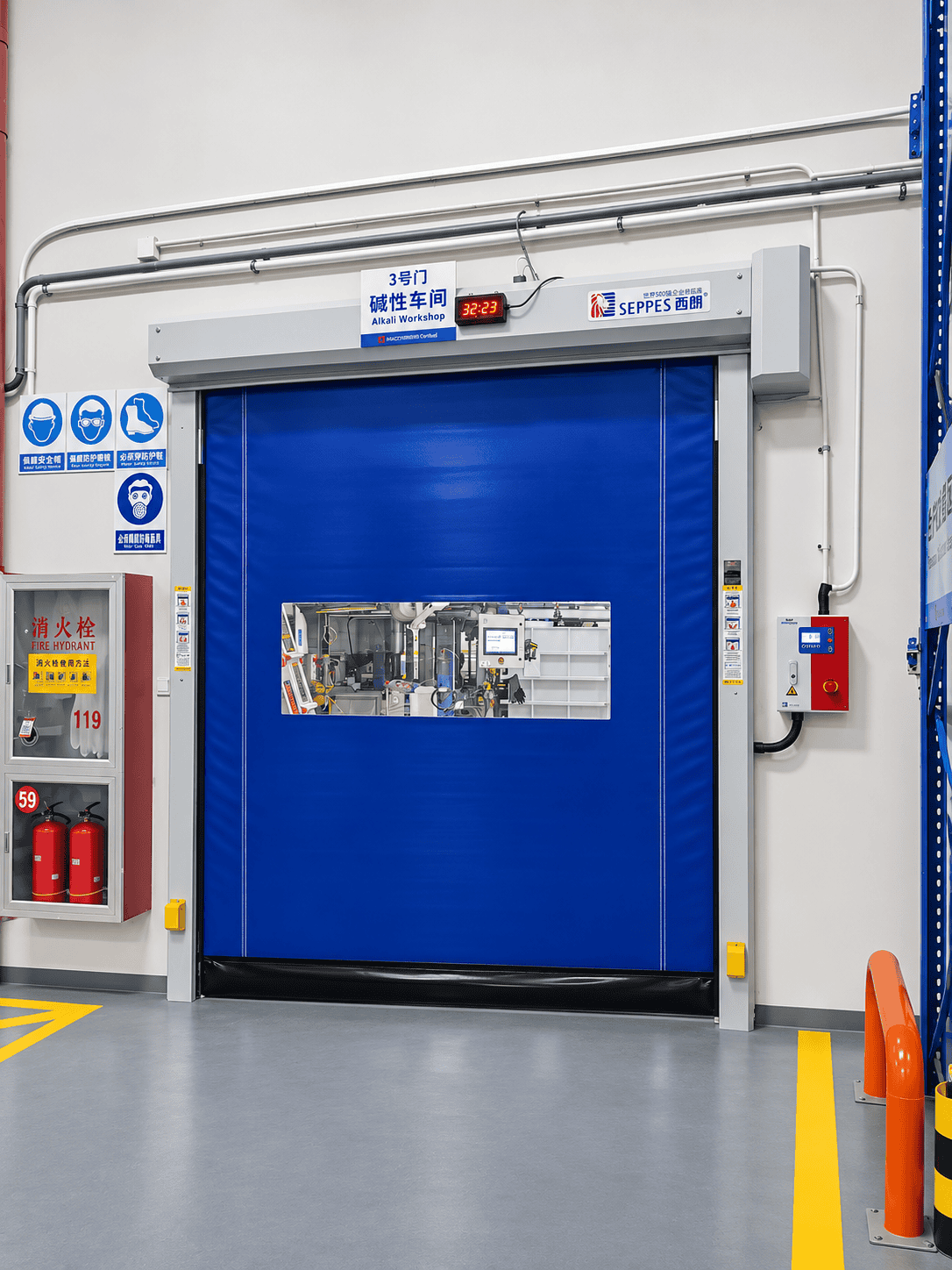
Zipper-sealed doors use side guides that engage the curtain edges. Some models are sold as self-repairing high-speed doors because the curtain can re-enter its guides after certain impacts. For cleanrooms or buffer rooms, specify the required sealing performance, cleaning method and any airlock sequence before comparing models.
3. High-Speed Stacking Doors
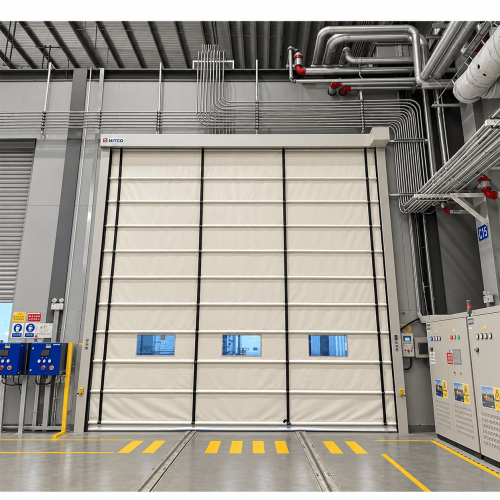
High-speed stacking doors, also described as high-speed fold-up doors for large openings, lift the flexible curtain into folds above the doorway. This approach is often considered for wide vehicle entrances and wind-exposed openings. Check the assembled headroom and the wind rating available for the quoted door size.
4. Rigid High-Speed Spiral Doors
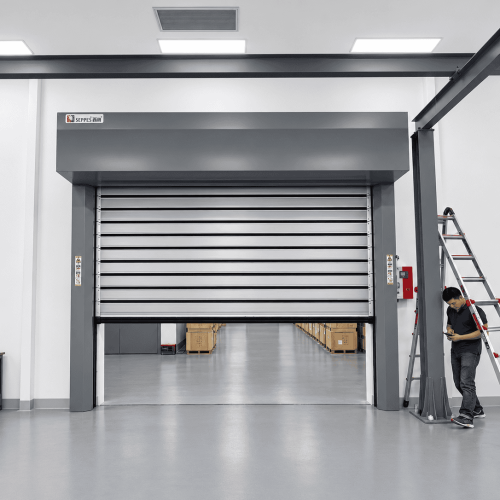
A high-speed spiral door uses rigid panels that follow an overhead spiral track. This design can suit busy factory entrances and warehouse access points where buyers need a rigid barrier and frequent vehicle access. Compare panel construction, wind resistance, available headroom and maintenance access.
5. High-Speed Sliding Doors
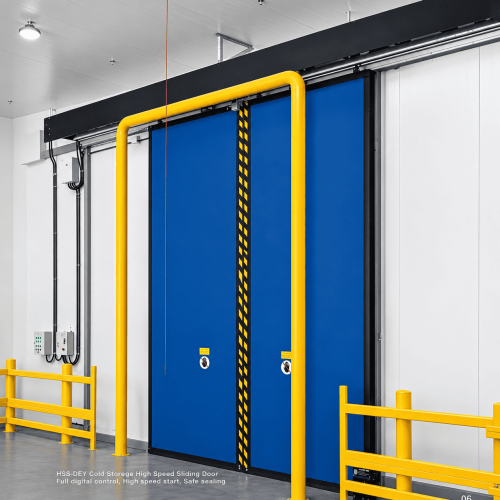
High-speed sliding doors move one or two leaves horizontally. Insulated configurations can serve refrigerated rooms when the wall beside the opening leaves enough room for the full travel of each leaf. Check for conflicts with columns, pipework, racks and adjacent doors.
6. High-Speed Side-Folding Doors
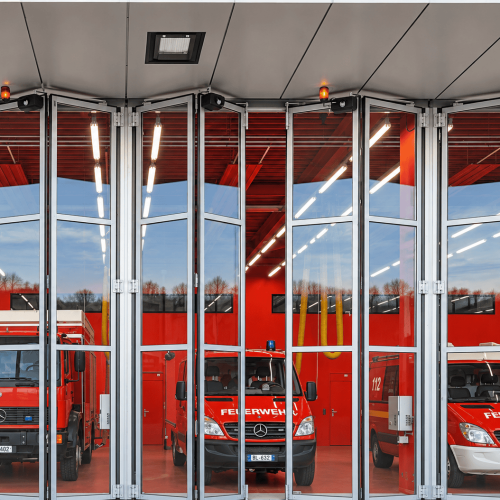
A side-folding design is one form of high-speed folding door. Its hinged panels fold toward the jambs, where they occupy space beside the opening. Measure the panel sweep and the space taken up by the folded panels, then confirm the clear width available to the largest vehicle or load.
7. Rubber High-Speed Roll-Up Doors
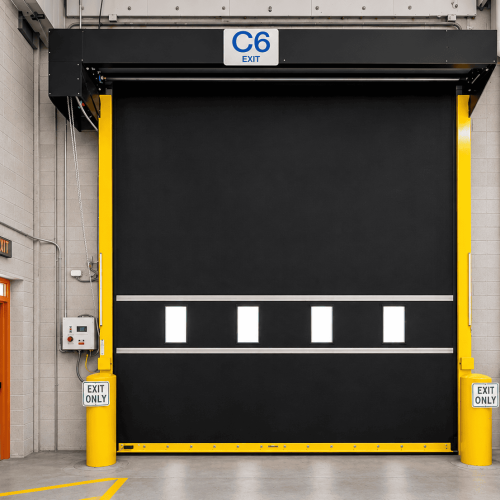
Rubber high-speed doors are available in roll-up designs with heavy-duty curtains. A high-speed rubber roll-up door is an option for vehicle maintenance bays and heavy-equipment facilities where resistance to punctures and tears matters. Ask how the proposed curtain and guides are designed to respond to accidental contact.
5 Types of High-Speed Doors by Application
8. Insulated High-Speed Doors
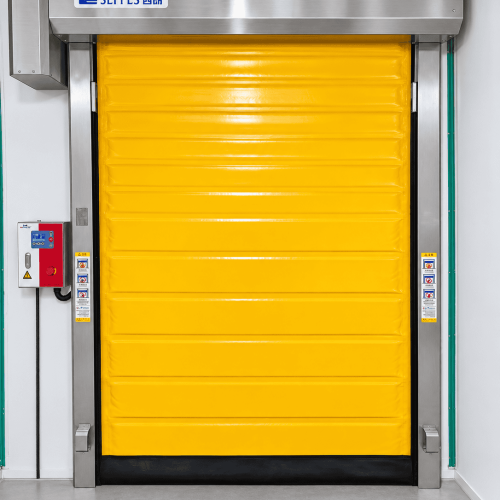
High-speed cold storage doors manage traffic between areas with different temperatures. A high-speed roll-up freezer door is one option where a vertical design fits the opening. Give the supplier the temperatures on both sides, expected traffic and any history of frost or condensation so it can assess sealing, insulation and guide heating.
9. Protective High-Speed Doors
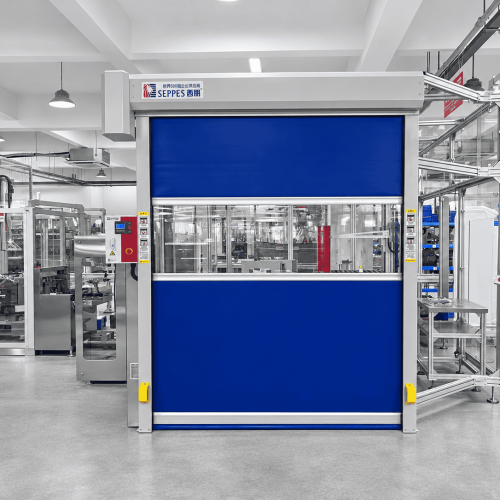
Protective high-speed doors, also called machine protection doors, provide a movable boundary at equipment openings. The SEPPES FlexShield series serves applications such as robot work cells and automated equipment enclosures. The equipment team should define the hazards, the door’s role in the safeguarding system and any required interlocking before the door is specified.
10. High-Speed Doors for Hazardous Areas
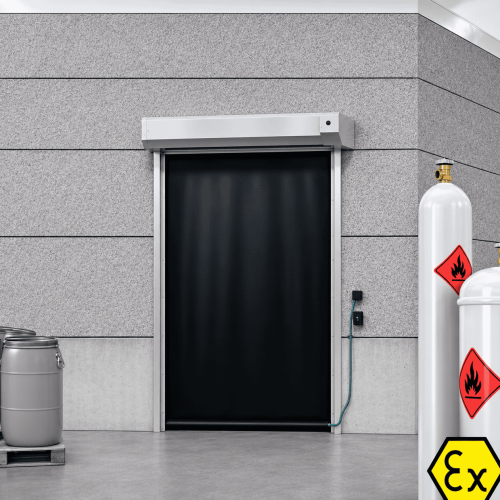
High-speed ATEX doors may be specified where the site’s hazardous-area requirements call for equipment with appropriate ATEX documentation. Provide the site classification and check that the applicable documentation covers the proposed door configuration, including its electrical components and controls.
11. High-Speed Doors for Food Processing
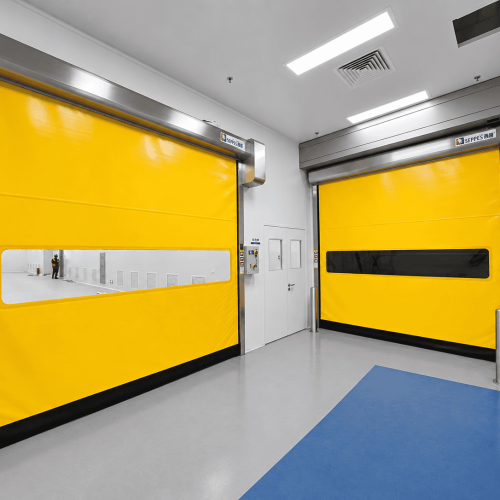
Food processing high-speed doors serve production and transfer areas with defined cleaning requirements. Fast roll-up doors for food processing plants can suit openings with limited floor space. Specify how the door will be washed, which cleaning agents will be used and how staff will access the curtain, frame and guides for cleaning.
12. AGV-Integrated High-Speed Doors
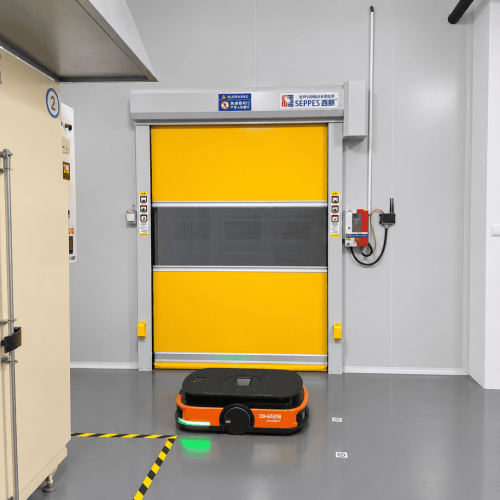
Industrial doors for AGV traffic lanes can use a PVC curtain or another structure suited to the opening. When specifying fast action doors for AGV routes, define how the vehicle requests opening, how it receives confirmation that the door is open, and how the system determines that the doorway is clear before closing.
How to Choose a High-Speed Door for Each Opening
Start with the conditions at each doorway. A busy internal forklift route may suit a PVC roll-up door. A wide exterior opening may need a stacking or rigid door with a suitable wind rating. A freezer opening on an AGV route brings both sets of requirements into the same specification, including frost control, sealing and the vehicle-to-door operating sequence.
For comparable quotes, give suppliers the same opening dimensions, daily cycle estimate, traffic type and environmental conditions. Ask each supplier to identify the mounting space and the options included in its proposal.
How to Measure Before Requesting a Quote

Use the SEPPES High-Speed Door Opening Measurement Guide and record all dimensions in millimeters from the intended mounting side.
Clear opening width. Measure between the finished jambs at the top, middle and bottom.
Clear opening height. Measure from the finished floor to the underside of the opening at the left, center and right.
Side clearance. Record the left and right sides separately, measuring from each jamb to the nearest obstruction.
Headroom and mounting-side depth. Measure the space above the opening and the available depth from the mounting face. Mark beams, pipes and cable trays on site photos.
Door travel space. Record the unobstructed wall length for sliding doors. For side-folding doors, check the panel sweep and the space required when the panels are folded.


