

When an industrial door has worked for more than ten years in a waste treatment plant, replacing old door is rarely just a cosmetic decision. In corrosive, humid, dusty, and windy environments, the door may already be part of a larger operational problem: slower vehicle movement, rising maintenance work, poor sealing, and reduced reliability at important passages.
This was the situation at a waste treatment and solid waste processing facility in Shaoxing, Zhejiang(like Waste Management, Inc.). The original doors had been used for over a decade and had reached the point where repair was no longer the best long-term answer. The project became a useful example of how waste treatment plants should evaluate old door systems before choosing new ones.
Why Waste Treatment Environments Age Doors Faster?
Waste treatment and recycling facilities are different from ordinary warehouses. Doors may face moisture, chemical gas, dust, particles, outdoor wind, and frequent vehicle traffic. These factors can accelerate corrosion and mechanical wear. A door that works well in a clean indoor workshop may not survive the same way near waste handling, sorting, or external vehicle routes.
For this reason, buyers should avoid choosing high speed fabric doors by speed alone. The first question should be about the environment: Is the opening exposed to corrosive gas? Is it indoors or outdoors? Does the door face wind pressure? Will vehicles pass frequently? Is the old frame already corroded?
When Repair Is Not Enough
If an old door has repeated curtain damage, frame corrosion, unstable operation, or poor sealing after years of use, repairing single parts may only delay the same failure. In the Shaoxing case, the old doors had already been used for more than ten years, so the customer needed a system upgrade rather than another temporary repair.
1.Matching Material to Corrosion Risk
Door type should follow the installation position. Internal passages and external main entrances should not be treated as the same application.
2. Internal Openings
For internal damaged doors, stainless steel high speed doors can be useful when the site needs faster operation, better corrosion resistance, and more reliable separation between work zones.
3. External Main Entrances
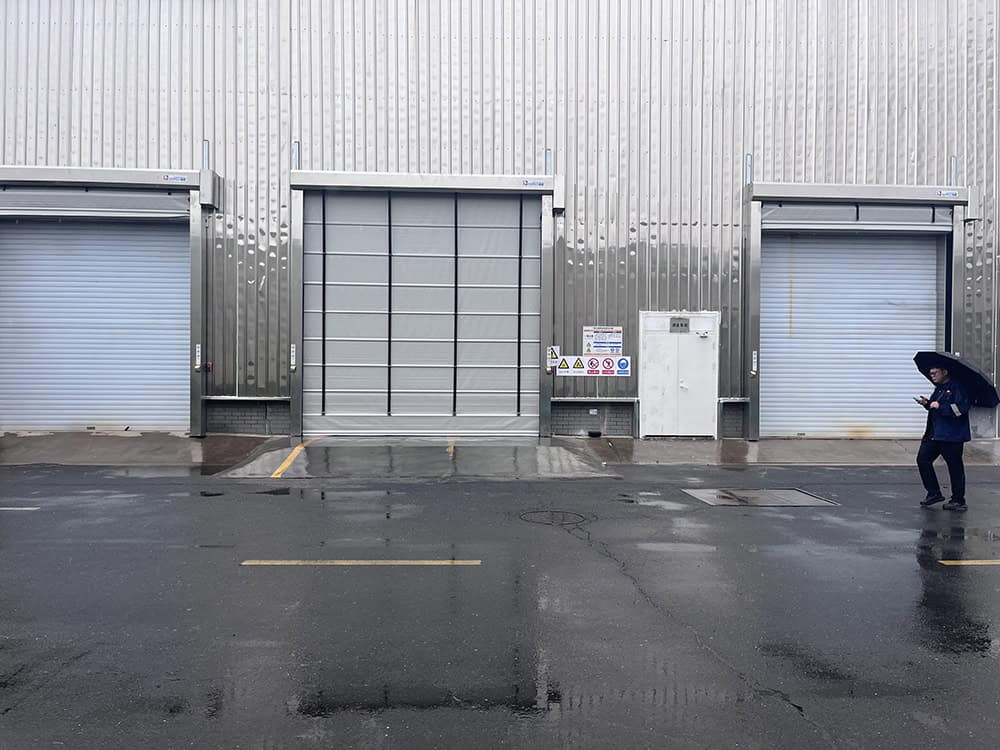
For external main entrances, wind resistance becomes more important. In the Shaoxing project, nine stainless steel stacking doors were selected for outdoor main passages. A stacking high-speed door has a more stable structure for large openings and is generally more suitable than a standard PVC high speed door where wind load is a key concern.
Steel rolling shutters and stacking doors are widely used together in industrial facilities such as warehouses, logistics hubs, and manufacturing plants. The steel rolling shutter provides high security, strong wind resistance, and reliable external protection, especially for large entrances exposed to harsh environments. The stacking door offers fast opening speed, flexible operation, and excellent sealing performance for internal zones with frequent traffic. When combined, they create a dual-door system that improves safety, energy efficiency, and workflow separation. This solution reduces heat loss, controls dust and noise, and ensures smooth logistics flow between different functional areas, making it ideal for modern industrial operations.
Practical Checklist Before Replacing old door
Before replacing old industrial doors in a waste treatment or recycling facility, buyers should check:
– How long the old doors have been used
– Whether the frame or hardware shows corrosion
– Whether the opening is indoor or outdoor
– Whether wind pressure affects door stability
– Whether stainless steel is needed for long-term durability
– Whether fast opening is required for vehicle traffic
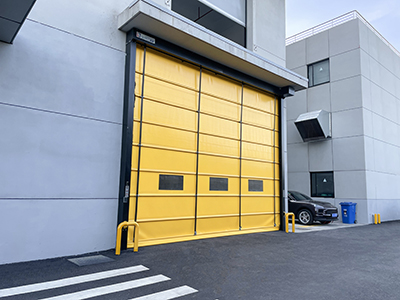
– Whether a stacking door is more suitable for external openings
– Whether a simple repair will only postpone full replacement
The key is not to recommend one door type for every opening. Waste treatment plants usually need a mixed solution. Some internal passages may need stainless steel high speed doors, while external entrances may need stainless steel stacking doors with better wind resistance.
SEPPES’s (door manufacturers) Shaoxing project shows three useful rules: environment determines material, installation position determines door type, and service life determines whether repair or replacement is more practical.
